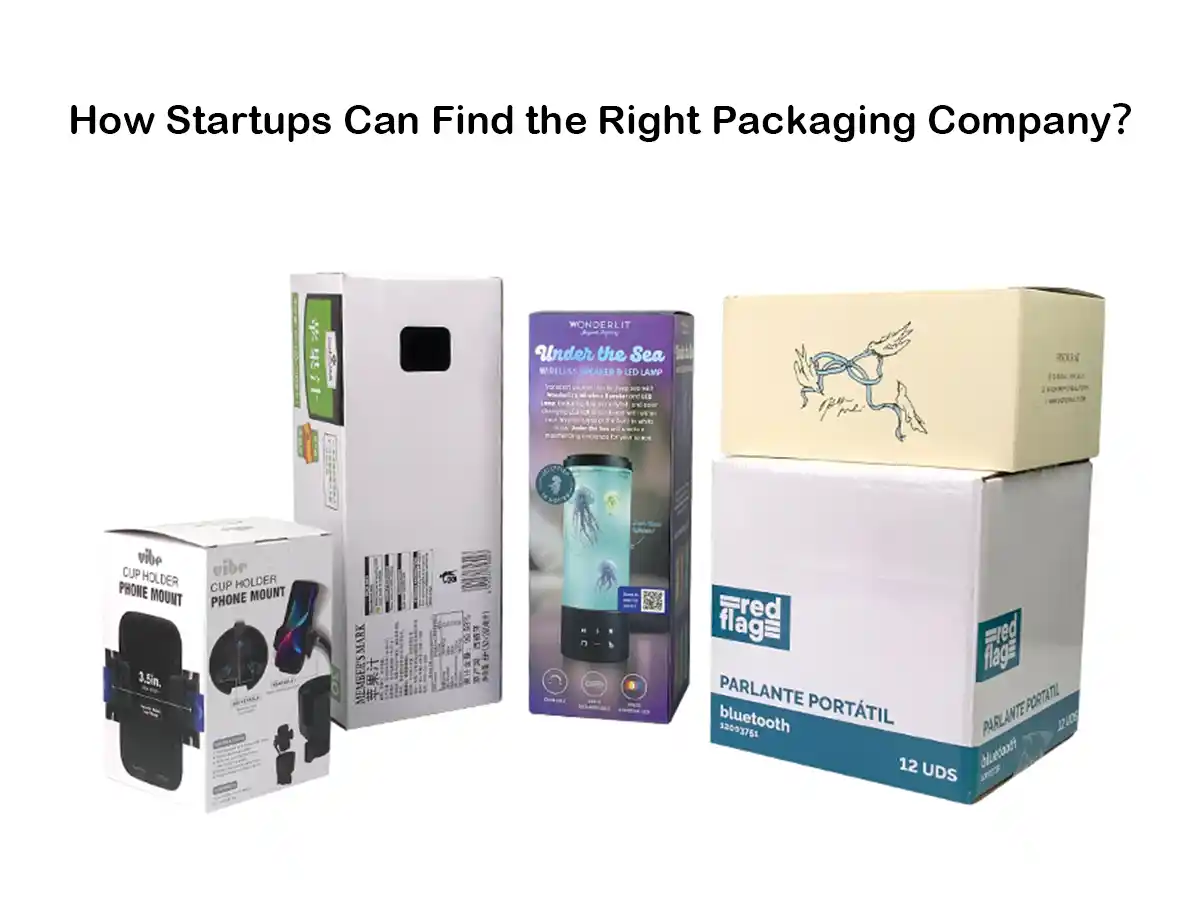
For a startup, packaging is not just a box or a bag. It affects how safe your product is in transit, how your brand feels in a customer’s hands, and how much you spend on shipping and materials. Choosing the wrong packaging company can lead to late launches, damaged goods, and wasted budget. Choosing the right one gives you control and peace of mind.
Below is a step-by-step guide to help you find, compare, and safely start working with a packaging company, especially for paper boxes, bags, and cards like those made by specialized manufacturers such as SLDpacking in China.
1. Why packaging choice matters for startups
For young brands, packaging impacts:
- First impression and unboxing – Customers judge quality quickly. A flimsy box or dull print lowers trust.
- Product safety – Poor materials or design mean returns and refunds.
- Cash flow – Oversized boxes raise freight costs; high MOQs lock cash in slow-moving stock.
- Launch risk – Delayed production or shipping can push back your launch date or leave you out of stock.
Because your volumes and product mix may change every few months, you need a partner who understands small brands and can scale with you.
2. Step 1: Get clear on what you need
Before you search for suppliers, write down a simple requirement sheet. It does not have to be perfect, but it should cover:
Product details
- Size and weight of each SKU
- How fragile it is ?
- Whether products are sold as singles, sets, or bundles
Packaging type
For most startups, this means paper packaging such as:
- Folding cartons (thin card boxes for cosmetics, supplements, etc.)
- Rigid gift boxes (luxury or premium items)
- Corrugated shipping boxes or mailer boxes
- Paper shopping bags or gift bags
- Inserts, sleeves, and cards for branding and protection
Many manufacturers, including those like SLDpacking, focus on custom paper solutions across these formats.
Brand and design needs
- Brand colors and logo usage
- Matte or glossy finish, foiling, embossing, special windows, etc.
- Whether you already have dielines and print-ready files, or need support
Budget, timeline, and volume
- Target unit price range
- How many units you need for your first run
- How often you plan to reorder
- Latest date you must receive the packaging to launch
Sustainability and compliance
- Do you need recycled paper, FSC-certified stock, soy-based inks, or specific local recycling symbols?
Your answers here will guide where you search and which factories are a good fit.
3. Step 2: Where startups can look for packaging companies
Once your needs are clear, start building a long list of potential partners from several channels.
3.1 Search engines and B2B platforms
Use Google and similar tools with specific phrases like:
- “custom paper packaging manufacturer for startups”
- “rigid gift box factory low MOQ”
- “custom printed paper bags supplier”
This helps you find manufacturers and trade companies, both local and overseas.
For overseas manufacturing, B2B platforms such as Alibaba, Made-in-China, and Global Sources can show many paper box and bag suppliers. Filter by:
- Product category (paper boxes, shopping bags, cards)
- Verified or audited suppliers
- Export markets similar to yours
3.2 Industry and startup communities
Ask in:
- Startup and DTC brand communities
- Incubators or accelerators
- CPG or e-commerce groups on LinkedIn
Founders are usually honest about who delivered on time and who did not.
3.3 Design agencies and printers
If you already work with a branding agency or a local printer, ask who they use for more complex paper packaging. Many agencies cooperate with manufacturers like SLDpacking for export projects and can introduce someone who already understands brand work.
3.4 Trade shows and exhibitions
Packaging and printing trade shows let you:
- Touch sample boxes and bags
- See print quality in person
- Ask technical questions directly
This is especially useful if you want long-term partnerships or if your packaging is complex. Wabel
4. Step 3: Build a shortlist that fits startup needs
From your long list, narrow it down to 3–5 suppliers by looking for:
Experience with small and growing brands
- Are they open to lower MOQs for your first order?
- Do they mention supporting startups or small batches?
Paper packaging manufacturers that are used to export work often offer digital proofing, 3D mockups, and design checks, which are very helpful when you do this for the first time.
Specialization in your packaging type
- If you need rigid gift boxes, avoid suppliers who mainly do plastic bags.
- If you focus on subscription boxes, look for strong corrugated box experience.
Companies like SLDpacking, which specialize in custom paper boxes, bags, and cards, are often better at color accuracy and finishing for those items than general product factories.
Location and logistics
- Local suppliers: faster shipping, easier communication, but higher cost.
- Overseas suppliers: lower unit price, more options, but longer lead times and customs steps.
Think about your volume, margins, and whether you can handle longer transit times.
Ability to grow with you
Ask directly if they can scale from a 1,000-unit test order to 10,000+ units later. Suppliers who cannot grow with you will force you to switch later, which creates risk.
5. Step 4: How to evaluate each packaging company
Now do a deeper check of each shortlisted supplier.
5.1 Capabilities and technology
Check:
- Which paper stocks and board grades they offer
- What printing methods they use (offset, digital, flexo)
- Which finishing options are available (lamination, foil, emboss, spot UV, etc.)
- Whether they can help optimize structure to reduce material waste or shipping cost
Manufacturers focused on paper packaging, like those behind many export gift box and paper bag projects, usually have dedicated structural engineers and color specialists.
5.2 Quality and consistency
Request physical samples (existing work and, ideally, a custom sample) and check:
- Color consistency with your brand colors
- Sharpness of print and text
- Clean cuts and folds, no cracks on edges
- Glue strength and box stability
If you are selling premium products, pay extra attention to rigid box corners and how lids fit bases.
5.3 Service and communication
As a startup, you need a partner who explains things clearly:
- Do they answer emails or messages quickly?
- Do they suggest improvements instead of just taking orders?
- Is there one project contact who follows your job from artwork to shipping?
Good communication often predicts smoother production later.
5.4 Pricing and terms
Ask each supplier to quote the same clear spec so you can compare:
- Unit price at different quantities (e.g., 500 / 1,000 / 3,000)
- One-time costs: tooling, plates, molds, or dieline development
- Sample costs and whether they are refundable against bulk orders
- Shipping method and cost (air, sea, courier)
- Payment terms (deposit, balance timing)
Pay attention to very low prices; they may hide thinner materials or weak quality control.
5.5 Lead time, MOQ, and flexibility
Lead time and MOQ strongly affect your cash and stock risk.
Ask:
- Standard production lead time after artwork approval
- Busy seasons when lead times are longer
- Minimum order quantity and how it changes with size or design
- Whether they can do mixed SKUs in one run (different designs in the same size)
Avoid suppliers who are completely rigid on MOQ and cannot explain their lead time process.
5.6 Experience and references
Look for:
- Years in paper packaging manufacturing
- Main export markets (EU, US, etc.) and industries served
- Case studies or photos of past work
- References you can contact (especially other startups or small brands)
6. Step 5: Manage risk before placing a big order
Even with a good feeling, treat the first order as a controlled test.
6.1 Start with prototypes or pre-production samples
Always approve:
- A structural sample (even white, without printing) to test fit
- A printed sample or pre-production proof to check color and finish
Test the sample by:
- Packing your product and shaking the box
- Sending a few units via your normal courier or fulfillment process
- Asking a few real customers or friends for feedback on unboxing
6.2 Place a smaller first order
If your budget allows 5,000 units, consider ordering 1,000–2,000 first. This reduces risk if:
- Colors shift in bulk
- Transit damage is higher than expected
- Lead times are longer than promised
You can correct these issues before scaling.
6.3 Use clear, written specifications
To avoid misunderstandings, send a simple spec sheet that covers:
- Dieline with exact internal dimensions
- Paper/board type and thickness
- Pantone or CMYK color values
- Finishes (lamination type, foil color, etc.)
- Packing method (flat packed vs pre-assembled, units per carton)
Many professional paper packaging manufacturers will help you complete this spec; it also protects both sides.
6.4 Agree on basic rules in writing
You do not always need a complex legal contract, but you should confirm by email:
- Final unit price, quantity, and delivery date
- What “acceptable quality” means (for example, color tolerance, allowed defect rate)
- What happens in case of serious quality issues (reprint, discount, or refund)
Keep all quotes, drawings, and confirmations in one folder for future orders.
6.5 Keep backup options
While building your main relationship, keep contact with at least one backup supplier who has already quoted similar packaging. If your primary factory is overloaded, you have a fallback without starting from zero.
7. A simple checklist for founders
Before you choose a packaging company, make sure you can answer “yes” to most of these:
- I know my basic requirements (product size, box type, branding, quantity, deadline).
- I have at least 3 quotes from suppliers who actually make the type of paper packaging I need.
- Each quote is based on the same specifications, so I can compare fairly.
- I have seen physical samples of similar work from each supplier.
- I understand each supplier’s MOQ and lead time, and they fit my launch plan.
- I tested at least one custom sample with my real product and shipping method.
- Key details (price, spec, delivery date, problem handling) are confirmed in writing.
- I feel comfortable with the communication speed and clarity of my chosen supplier.
- I have at least one backup supplier identified.
You can turn this into an internal checklist for your team whenever you source new boxes, bags, or cards.
Conclusion
Finding a packaging company as a startup can seem overwhelming, but the process becomes manageable when you break it into steps:
- Get clear on what you need.
- Search in the right places and build a long list.
- Shortlist suppliers that understand startups and your packaging type.
- Evaluate them on capability, quality, service, price, lead time, and experience.
- Manage risk with samples, small first orders, and clear written agreements.
Whether you end up working with a local supplier or an export-focused paper packaging manufacturer like SLD-style factories in China, this structured approach helps you avoid common mistakes, protect your budget, and bring your products to market with confidence.