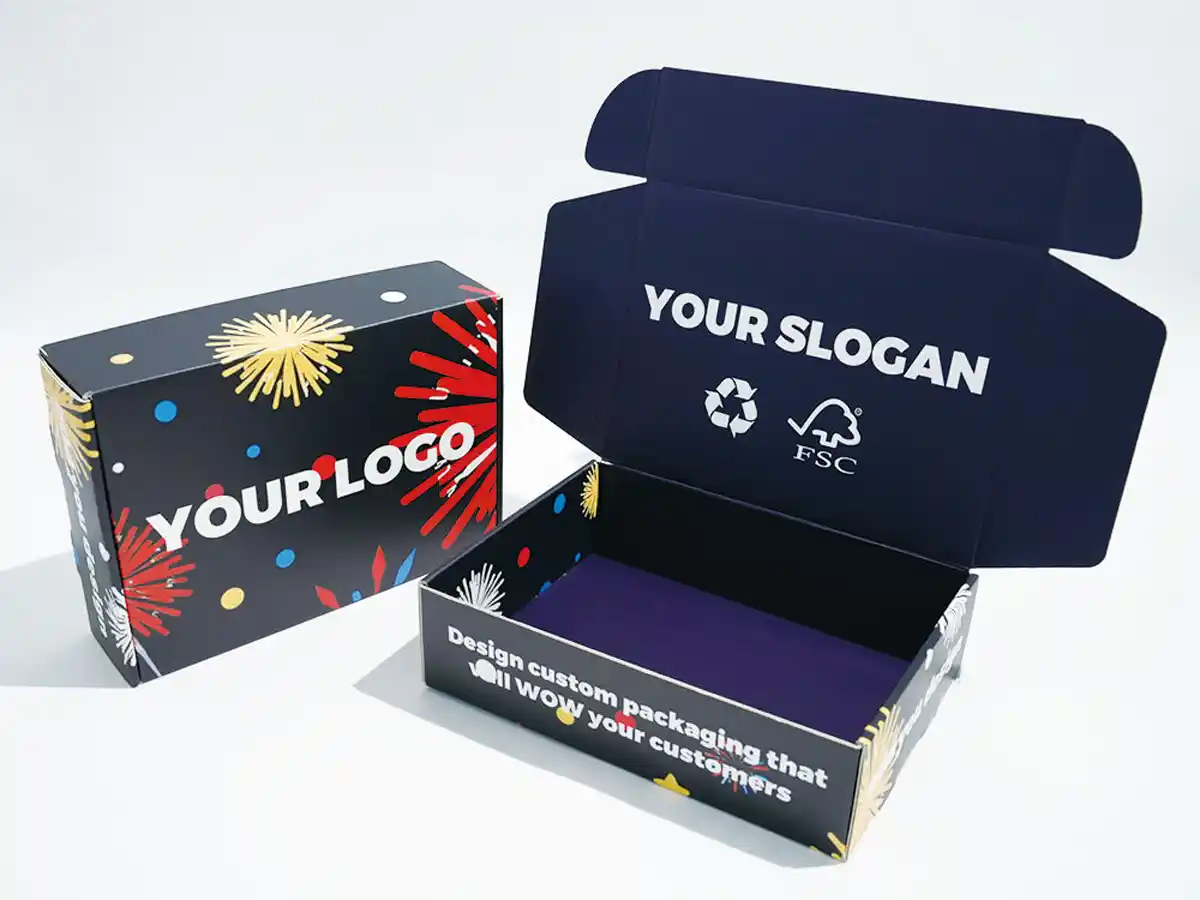
Minimum Order Quantity (MOQ) is one of the first things buyers notice when they start asking for custom boxes and paper bags:
“Why do I have to order at least 500 or 1,000 pieces?”
From a factory point of view, MOQ is not a random rule. It is a way to make custom production economical and stable, so both the buyer and the manufacturer can control cost, quality, and risk. MOQ simply means the smallest number of units a supplier is willing to produce in one run for a custom product.
What Does MOQ Mean in Custom Packaging?
Custom packaging is not the same as buying stock boxes from a warehouse.
When you ask for your own size, paper, printing, and logo, the factory must set up machines and materials just for your order. That setup work happens whether you order 300 or 30,000 pieces.
Many paper packaging factories that focus on custom boxes, paper bags, and display boxes (like ours) usually set MOQs around 300–1,000 pieces for offset-printed paper packaging, because this is where production starts to become efficient and the unit price reasonable.
Why Printers Need MOQs for Boxes and Bags?
1. High setup costs
Before the first usable box comes out, the factory must:
- Adjust artwork and layout
- Make or set up printing plates
- Prepare cutting dies or box molds
- Set up the printing, laminating, and die-cutting machines
These are fixed costs. Setting up for 100 boxes costs almost the same as for 5,000, so very low quantities make each piece extremely expensive.
2. Paper and material purchasing
Packaging suppliers also buy from upstream mills and material vendors, who often have their own MOQs. Large sheets must be cut down, and there is unavoidable waste at the edges. Special papers, laminations, or unusual colors usually mean bigger minimums from those suppliers. MOQ helps make sure that material cost and waste stay under control.
3. Machine efficiency and time
Each time a machine changes to a new job, the factory stops production to clean, adjust, and test. If an order is too small, the time spent on setup is larger than the time spent actually running your boxes or bags. MOQ protects machine efficiency so lead times and pricing stay reasonable for all customers.
4. Quality and color stability
Printing presses need a certain running length to stabilize ink, color, and registration. There is always some waste at the beginning for test sheets and color checks. That waste must be counted somewhere. A reasonable MOQ builds these quality-control pieces into the total quantity.
5. Labor and overhead
Every order—large or small—needs prepress checking, communication, sampling (sometimes), packing, and quality inspection. If the quantity is too low, the labor cost per piece becomes very high. MOQ keeps that per-unit labor cost at a level most buyers can accept.
How MOQ Affects Your Cost and Risk?
MOQ is closely tied to unit price. The higher the quantity, the more pieces share the same fixed costs, and the cheaper each box or bag becomes.
However, ordering “as many as possible” is not always the safest choice. For buyers, there are two main risks:
- Overstock risk – If you order far beyond what you can use in a reasonable time, you tie up cash and storage space. If your design or logo changes, leftover stock may be wasted.
- Reorder risk – If you insist on very low quantities below the normal MOQ, each reorder will carry a higher unit price, and you repeat setup and freight costs again and again.
The goal is to find a quantity near or slightly above the factory’s MOQ where unit cost is acceptable and your inventory risk is still under control.
Practical Ways to Work With MOQs
If the quoted MOQ feels too high, you still have options:
- Combine SKUs
Print the same size box or bag with different artworks in one run, if the factory’s process allows it. This helps reach MOQ while serving several products. - Use more standard materials
Common paper weights, standard white or brown kraft, and regular finishes (matt/gloss lamination, standard foil colors) usually mean lower MOQs than very special materials. - Consider simpler structures or digital printing for tests
For very small trial orders, a simpler box style or digital print run can reduce MOQ, even if the unit price is a bit higher. - Plan 3–6 months ahead
If you share a realistic forecast with your supplier, they can suggest a quantity and spec that balance stock pressure and price.
Key Questions to Ask Your Packaging Supplier
To manage MOQ and risk, ask direct, practical questions:
- What is the MOQ for this size, material, and printing method?
- Which factors (paper type, special finish, printing process) are pushing the MOQ up?
- If we adjust paper weight, size, or finish, how will the MOQ and unit price change?
- Can we combine several designs or SKUs in one print run?
- What quantity range gives the best balance between total cost and unit price?
Conclusion
MOQs for custom boxes and bags are not meant to block small buyers. They are a response to real costs in setup, materials, labor, and quality control. When you understand how MOQ works, you can plan more confidently, choose realistic quantities, and discuss smarter options with your packaging manufacturer. In the end, a well-managed MOQ helps both sides: you get stable quality and fair pricing, and the factory can run your packaging efficiently and reliably.