
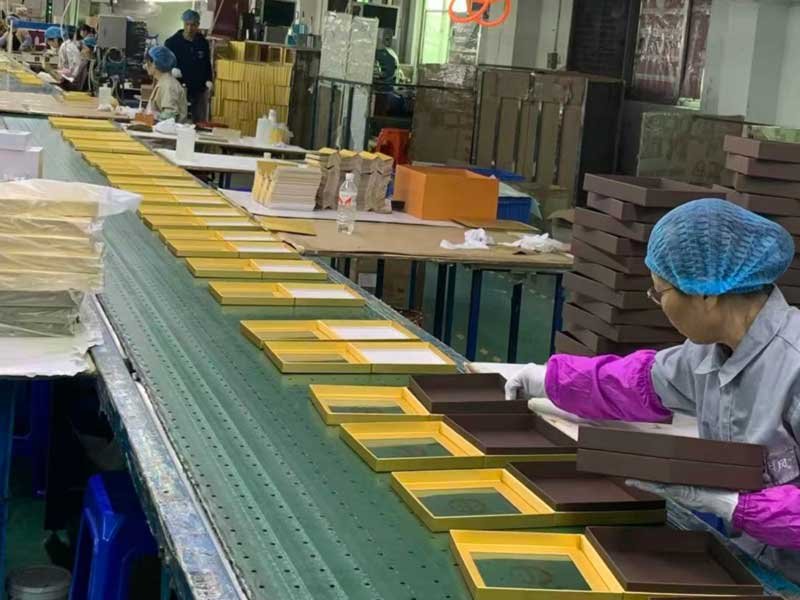
Handmade rigid boxes look simple, but they’re not forgiving. A tiny color shift, a soft corner, or a wrap bubble can make the whole box feel “off.” In practice, handmade box quality control comes from three things working together: strict quality inspection, skilled workers, and tight coordination between machines and handwork.
Below is a practical way to explain that system—plus a checklist buyers can use when approving production.
1) Strict quality inspection isn’t one step—it’s a chain
A common mistake is treating QC as a final inspection before shipping. In rigid box production, quality is “built in” through multiple checkpoints: incoming materials, in-process checks, and final inspection. Many rigid box makers describe QC in staged control points like IQC (incoming), IPQC (in-process), and FQC (final).
A. Incoming material checks (before production starts)
If the base materials vary, everything downstream becomes harder to control. Typical incoming checks include:
- Greyboard thickness & stiffness: affects box squareness and crush resistance
- Wrap paper condition: grain direction, moisture, scratches, coating consistency
- Adhesives: viscosity and open time (too fast = poor bond; too slow = wrinkling risk)
- Specialty materials: foils, films, textured papers—verify lot consistency
Buyer tip: Ask the factory whether they record incoming material results by lot/batch. If a defect shows up later, batch traceability saves days.
B. In-process inspections (where most defects are prevented)
In-process checks are where most handmade box defects are caught early:
- Printing color consistency & alignment: avoid visible shifts across the run
- Board cutting / V-groove / corner notching accuracy: impacts folding and corner tightness
- Gluing & wrapping: check for bubbles, wrinkles, lifting edges, and corner “ears”
- Dimensional tolerance: length/width/height, lid fit, drawer sliding resistance (if applicable)
Many manufacturers use “first-piece approval” and then periodic checks (for example, every X sheets or every X cartons) to keep the process stable.
C. Final inspection (what ships must match the approved sample)
Final inspection is the last gate. It typically includes:
- Appearance checks: scratches, dents, glue stains, wrap bubbles, corner cracks
- Functional checks: lid friction, magnet alignment, ribbon pull strength, insert fit
- Count & packing: right quantity, correct labels, correct carton packing method
Sampling vs. full inspection: Many shipments use AQL sampling based on ISO 2859-1 (especially for higher volumes), while luxury rigid boxes often add 100% visual checks for cosmetic defects.
2) Worker skill is where “handmade” quality is won or lost
Machines can cut and print accurately, but handmade rigid boxes still rely on people for finishing steps where touch and judgment matter. Even with good materials, two operators can produce different results unless the work is standardized and trained.
Key skill-dependent areas:
- Corner wrapping and smoothing: controlling tension so corners look sharp without tearing paper
- Glue control: consistent glue spread prevents waves, stains, and lifting edges
- Alignment by eye: keeping wrap position consistent so logos and patterns sit correctly
- Defect awareness: knowing what “early-stage” defects look like (so problems don’t repeat)
What “good” factories do: They train to a standard (“golden sample”), use clear defect examples, and keep the same operators on the same box style when possible (reduces variation). This is especially important with specialty papers, soft-touch lamination, or foil—finishes that show defects easily.
3) Machine coordination keeps handmade work consistent
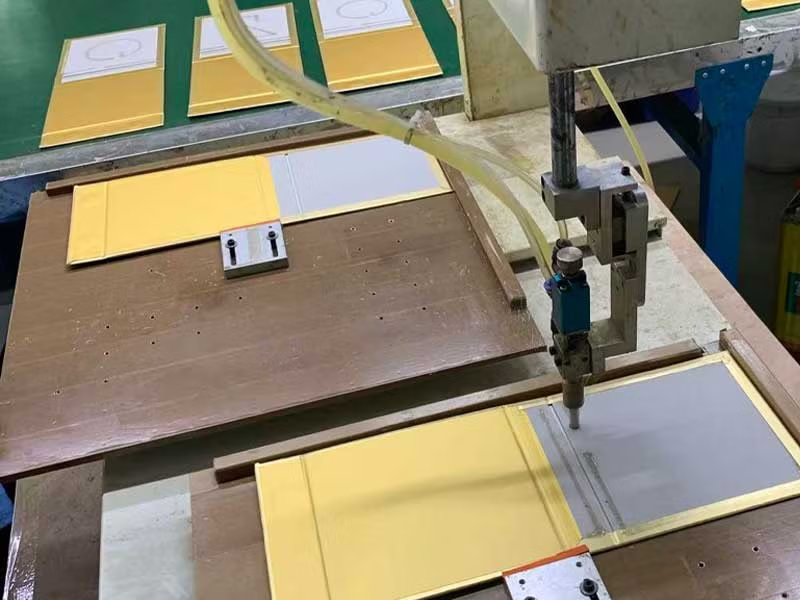
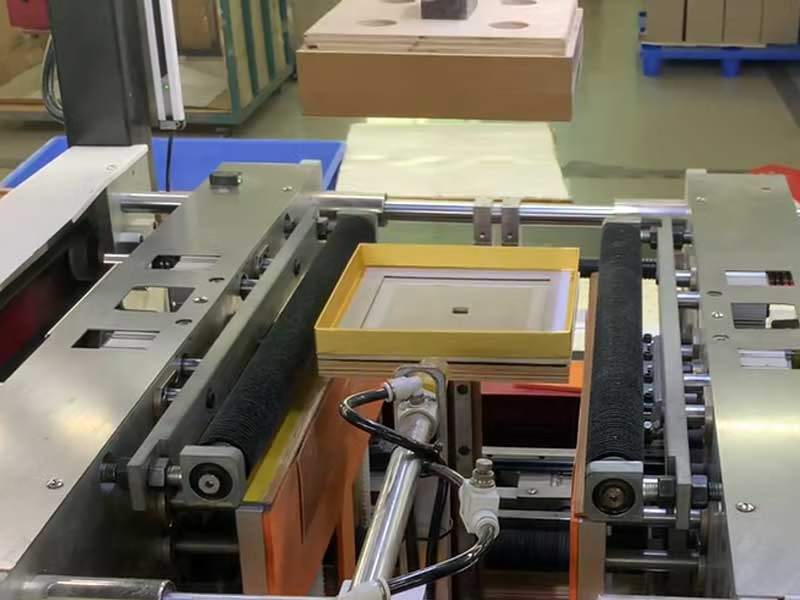
“Handmade” doesn’t mean “no machines.” The best quality usually comes from the right mix: printing, cutting, grooving, and positioning equipment doing repeatable steps—then skilled workers finishing the details.
Where coordination matters most:
Printing ↔ color proofing ↔ inspection
If the press output drifts (ink density, registration, scuffing), hand assembly can’t fix it. Many established packaging manufacturers run controlled print workflows (often with high-end presses) and verify color and alignment during the run.
Board cutting/grooving ↔ folding ↔ corner quality
If groove depth or corner notching is off, the box may fold unevenly or create corner gaps. That increases manual “force,” which can crack wraps or deform corners.
Wrapping process ↔ glue behavior ↔ environment
Temperature and humidity influence paper stretch and glue drying. That’s why good coordination includes:
- glue pot checks and viscosity control
- stable workshop conditions
- timing rules (how long to rest before the next step)
Some lines also use optical/visual checks to reduce human error on repeatable inspection tasks.
A practical quality inspection checklist for handmade rigid boxes
Use this as a buyer-facing checklist for approvals and production updates:
Appearance (cosmetic)
- No bubbles, wrinkles, lifting edges, or glue stains
- Corners are tight and symmetrical
- No scuffs, scratches, dents, or dirty marks
- Foil/UV/emboss is clean and positioned correctly
Structure & dimensions
- Box is square (no twist), stable on a flat table
- Dimensions match tolerance (confirm target tolerance in writing)
- Lid fit is consistent across samples (not too loose/tight)
Bonding & durability
- Wrap adhesion holds at corners/edges (no peel)
- Corner folds don’t crack under light stress
- Optional: basic drop/stack tests for shipping risk (especially for heavier products)
Function (if applicable)
- Magnets align and close cleanly
- Drawer slides smoothly, ribbon pull is secure
- Inserts (EVA/paper pulp/foam) fit product without rattling
What to ask a supplier before mass production
If your article needs a quick, helpful close, these questions work well:
- What are your in-process QC checkpoints (not just final inspection)?
- Do you use AQL sampling (ISO 2859-1) or full inspection for appearance?
- Can you provide a golden sample and a defect standard (major/minor/critical)?
- How do you control color consistency during printing?
- How do you prevent common rigid box issues like corner gaps, wrap bubbles, and glue marks?