
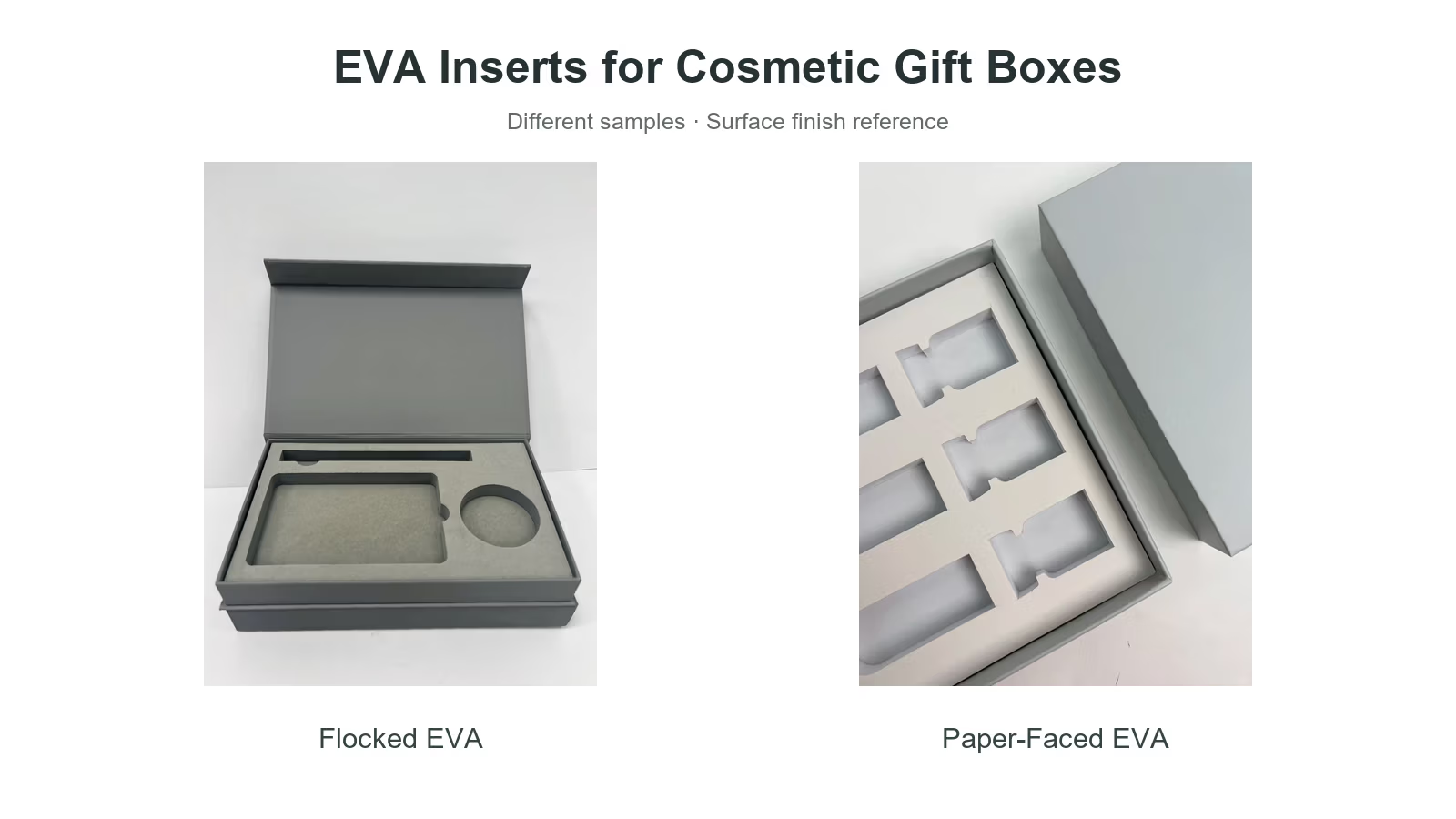
EVA inserts are useful in cosmetic gift boxes because they combine shaped product support with a tidy presentation. A single insert can organize a serum bottle, a cream jar and smaller accessories, while flocking or a paper facing helps the interior match the brand’s visual style.
The choice involves two decisions: how the foam supports the products, and what surface the customer sees and touches. Flocked EVA offers a textile-like finish; paper-faced EVA creates a surface that can coordinate with the box’s paper and artwork. Both need to be developed around the actual containers and the way the gift will be handled.
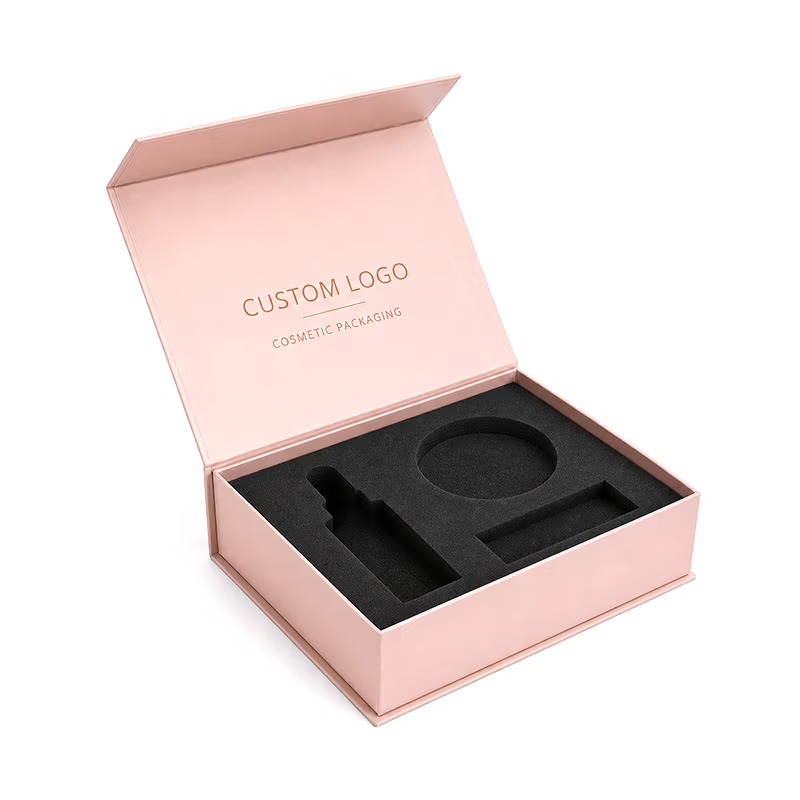
What an EVA insert contributes
EVA stands for ethylene-vinyl acetate. In packaging, EVA foam can be cut into shaped recesses and assembled in layers to create a tray with different cavity depths. With a suitable grade and thickness, the foam can provide cushioning support, while the cavity shape and finished fit help keep each container in position. A flocked surface or paper facing changes the exposed finish.
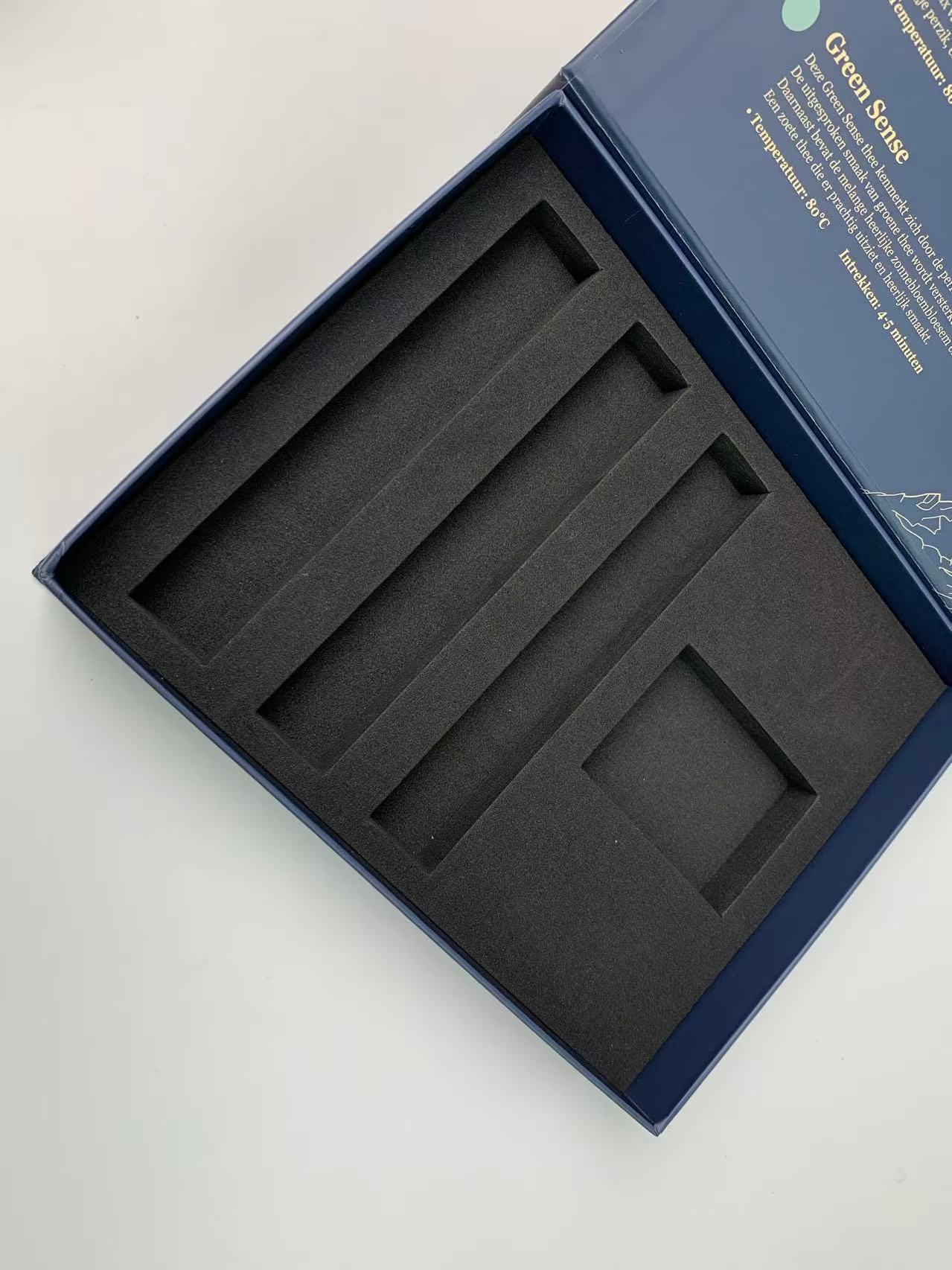
Specify the foam grade, firmness, thickness and construction with the manufacturer. The name EVA alone does not define how tightly a jar will sit, how much a support will compress, or how the finished pack will perform during delivery.
Why it suits cosmetic gift sets
It accommodates different container shapes
A cosmetic set may combine a round jar, a narrow bottle and a long accessory. Separate recesses let the designer position each item and leave space between them. Support can be developed around the container body, with clearance around a dropper, pump or cap where needed.
The goal is controlled positioning with comfortable removal. A bottle that must be pulled out by its pump has not gained a good user experience simply because the cavity looks precise.
It helps build a consistent display
Products of different heights do not have to appear randomly scattered inside the box. Different cavity depths can establish a deliberate display level, keep key labels facing the recipient and give each item a defined position.
This requires a drawing and a loaded sample. A deeper cavity can change both the visible portion of a bottle and the space available for fingers; raising a jar can reduce its clearance from the lid. Develop these relationships together.
It offers a choice of exposed surfaces
A foam insert does not have to look the same in every gift box. Plain EVA can provide a direct, functional appearance. Adding flocking or a paper face introduces another color and texture choice while retaining an EVA supporting body.
For custom cosmetic packaging, this allows the insert to become part of the opening experience: a soft-looking textile surface, a quiet paper interior or a contrast that makes the products stand out.
EVA with flocking: a textile-like presentation
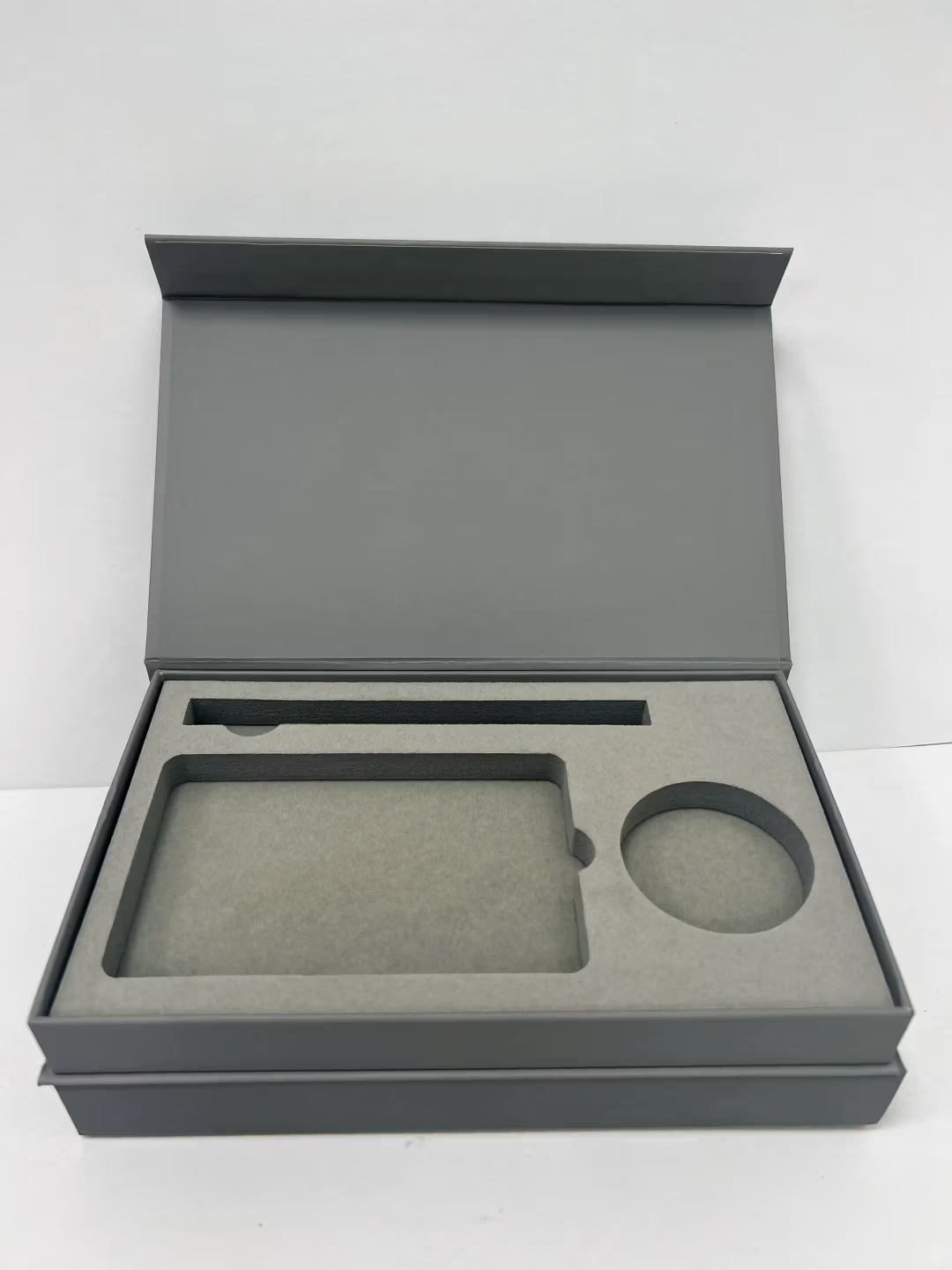
Flocked EVA is worth considering when the interior should have a textile-like appearance and touch. The gray sample above shows how the facing changes the top of the insert while the dark cavity walls still outline each recess. The contrast can make the layout look deliberate without covering every visible surface in the same way.
Flocking uses short fibers attached to an adhesive-coated substrate. The Flock Association’s process explanation also shows why adhesive application, fiber coverage and cleaning belong to the process specification. A directly flocked foam surface and foam laminated with a pre-flocked sheet or fabric are different constructions, even if both are described commercially as flocked EVA.
Ask the supplier which construction is being quoted and which areas it covers: the top face, cavity floors, walls, or a combination. A matching color name alone is insufficient to define the result.
When reviewing a sample, look for even coverage, clean cut edges and a well-bonded surface. Load and remove the finished cosmetic containers, then inspect for loose fibers, color transfer or marks on decorated surfaces. A soft-looking finish is a presentation choice; suitability for a particular coating or label needs to be checked with that product.
EVA with a paper face: coordinate the inside and outside
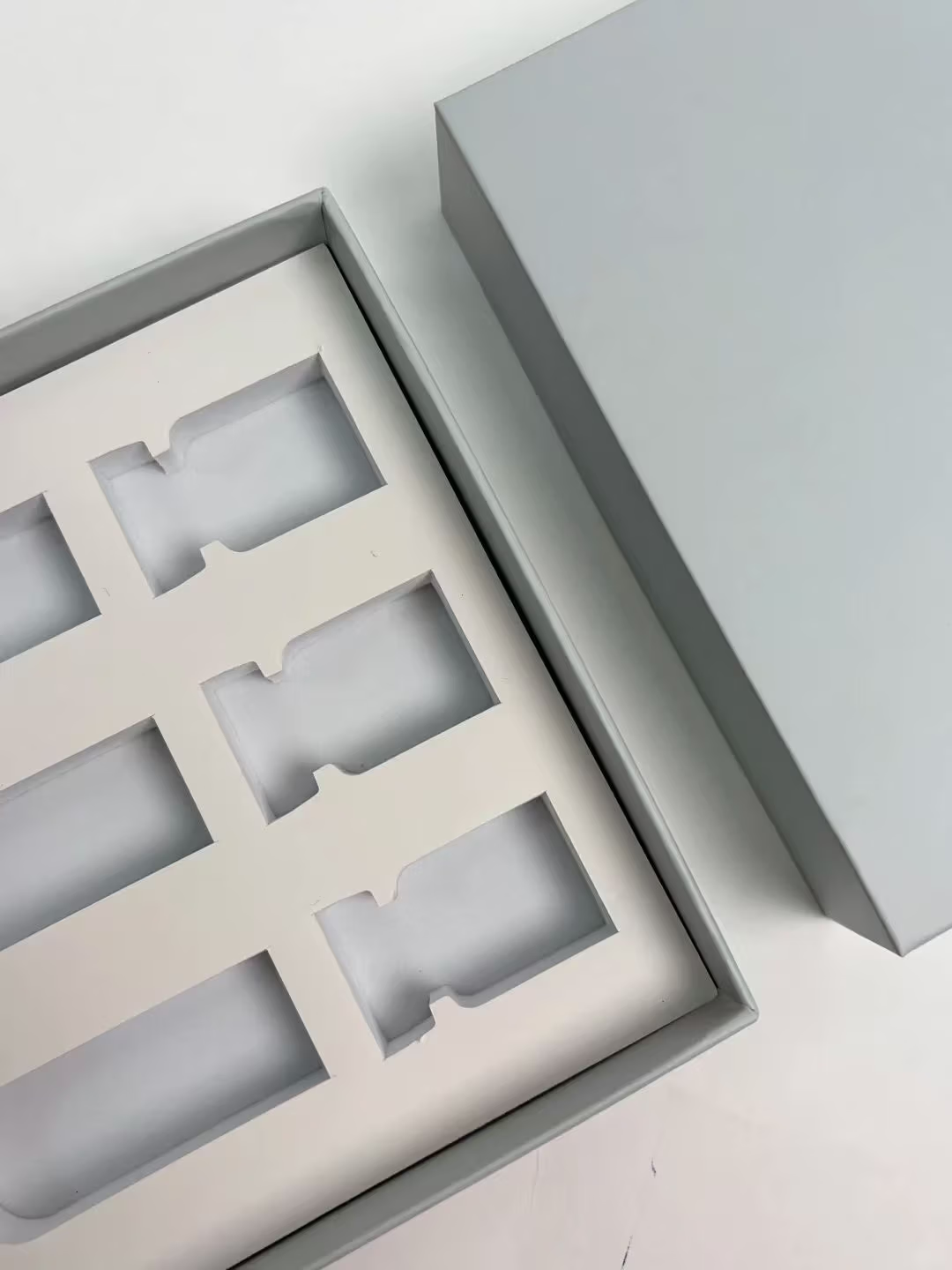
Paper-faced EVA, also described as paper-laminated EVA, combines a shaped foam body with a bonded paper or paperboard surface. It is useful when the interior should coordinate with the outer wrap, continue a brand color, or carry artwork on the exposed face.
In the sample above, the pale surface makes the insert read as part of the box interior. Repeated rectangular openings and finger notches create a clear layout. This reference explains the facing and access details; an actual cosmetic set would need its own cavity shapes and depths.
Paper selection matters as much as its color. A textured sheet, a smooth printed paper and a coated surface will create different appearances and contact conditions. If text or graphics are required, approve them on the selected paper and finished insert, with the openings in their correct positions.
Also agree what the paper covers. A top-facing sheet does not automatically conceal every foam wall or cavity floor. Check the alignment between the paper openings and foam cutouts, the bond near corners, and any exposed paper edges that may rub against a container during removal.
Paper-faced EVA still contains foam and adhesive. If the project requires a paper-only insert, that is a different material and structural brief.
Plain, flocked or paper-faced: how to choose
| Option | When to consider it and what to approve |
|---|---|
| Plain EVA | Useful when the foam’s own appearance suits the pack. Approve its surface, cut quality, fit and removal without an added facing layer. |
| EVA with flocking | Consider for a textile-like interior. Approve the flocked construction, coverage, color, bond and contact with the product. |
| Paper-faced EVA | Consider for coordinated paper colors or printed artwork. Approve paper choice, opening alignment, exposed edges and bonding. |
Start with the product’s support requirements, then compare finishes on that proposed structure. When assessing quotes, keep the foam specification, cavity depths, finish coverage, assembly and quantity clear. A difference in price may reflect a different construction, rather than the surface appearance alone.
Check the finished insert with the actual cosmetics
Approve a sample with the intended surface already applied. Flocking, paper, adhesive and layer assembly can affect the finished fit and appearance; an unfinished foam sample does not confirm those details.
- Load the complete set. Include filled containers or representative weights, final labels, caps, pumps and accessories. Check that each item sits at its intended level.
- Check where support is applied. Review the contact around the container body and base. Leave appropriate clearance for fragile or operating parts rather than relying on a pump or decorative cap to retain the product.
- Try removal. Use the finger notches or planned grip points. The customer should be able to lift an item without tearing a paper edge, dragging its label against a tight wall or pulling on its closure.
- Inspect contact surfaces. After the agreed loading and removal trial, check the insert and containers for fiber transfer, color marks, scuffing or lifted facing edges.
- Close and handle the complete pack. Confirm lid clearance and the intended display orientation. If the set will be sent by courier, assess the complete shipping package as a separate part of approval.
Record the approved foam specification, facing material, cavity layout and sample version together. If the bottle shape, label, cap or facing changes, review the affected fit and contact points again.
When another insert may be enough
EVA is a candidate when a shaped foam body and its presentation options serve the set. For lighter products that can be positioned with folded supports, a paperboard insert may meet the brief. A project prioritizing a paper-only construction should compare that approach directly, rather than choosing EVA and adding a paper face.
The same applies to the outer box: choosing a magnetic, drawer or lid-and-base format does not determine the insert material. Specify the product layout, opening experience and delivery conditions together.
Contact SLD Packing with your cosmetic container dimensions, filled weights, quantity and preferred finish. Include product samples or clear views of the labels, pumps and decorative surfaces, and state whether you want plain EVA, EVA with flocking or paper-faced EVA considered for the project.