
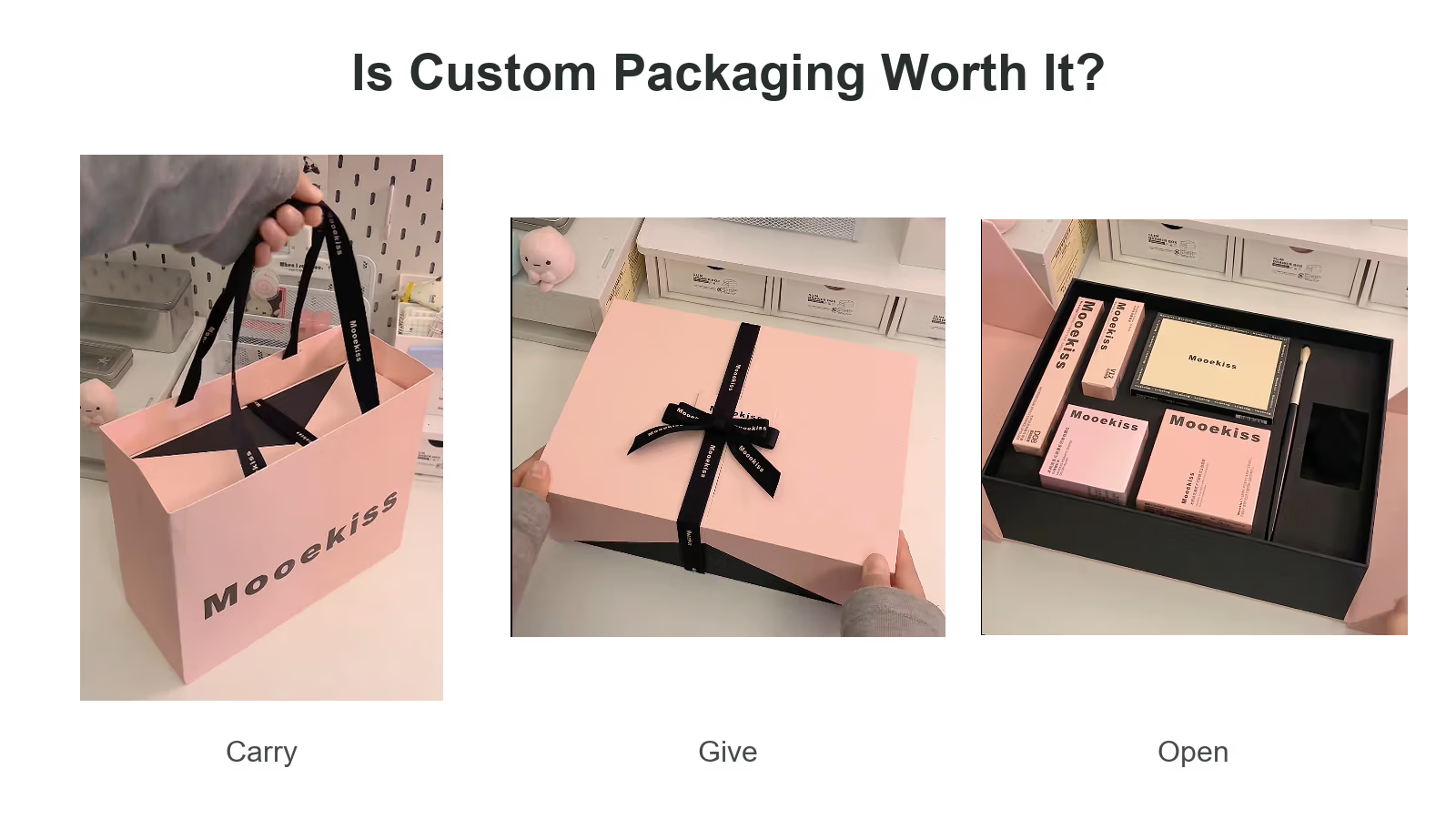
Custom packaging is worth considering when it solves a specific problem: making a gift ready to give, helping a product get recognized on a shelf, reducing movement in transit, or simplifying packing. A more expensive box is harder to justify when customers are buying routine replenishments, margins are tight, or the extra layers add work without a clear benefit.
Start with the sales channel and the contribution left from each order. Then test the smallest packaging change that could do the job. Customer compliments are useful feedback; the investment decision also needs costs, product-condition records and customer behavior.
Do customers actually care about branded packaging?
Some do, but they may care about different things. A gift buyer may value a presentable box. A repeat buyer may want quick access and less material to dispose of. A shopper comparing products in a store needs to recognize the brand and understand what is inside.
Merchant discussions reflect this disagreement. In the r/smallbusiness thread about custom packaging, visible replies include enthusiasm for gift presentation and preferences for simpler packaging. A separate r/ecommerce discussion about when to invest includes suggestions to start small. These are individual opinions, including some commercial replies, rather than a consumer survey or proof of return on investment.
The useful question is: Which part of this customer’s buying or receiving experience would the proposed packaging improve? If that answer is unclear, begin with a smaller change.
Product price matters, but contribution matters more
A higher selling price creates no automatic packaging budget. Subtract the product cost, discounts, transaction and channel fees, and variable fulfillment costs to understand what an order contributes before the proposed upgrade. An expensive product can still leave little room for additional packaging.
Then consider the purchase occasion. An inexpensive item bought as a gift may benefit from a neat presentation, while a higher-priced refill may need a compact protective pack. Price helps establish what the business can afford; the channel and occasion establish what the packaging needs to do.
There is no universal percentage of selling price that makes custom packaging worthwhile. Set a cost ceiling from the contribution you need to retain, then ask whether the proposed benefit can reasonably cover the added cost.
Four situations call for different investments
Gifts: presentation can be part of what is being bought
For a birthday set, a hospitality gift or a seasonal collection, the package may help the buyer hand over a complete gift without arranging separate wrapping. A coordinated box, an orderly layout and a short gift message can serve a clear purpose.
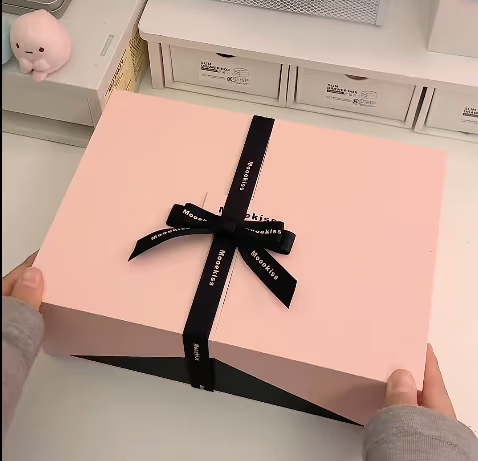
Consider custom rigid gift boxes when the presentation, opening experience and product arrangement matter to the offer. Start by deciding which components are necessary. A carrying bag, ribbon, insert and printed card each add another cost and packing task.
Keep the upgrade limited if most orders are self-purchases or gift demand is seasonal. A separate gift option can help identify paid demand, although customers choosing it are a self-selected group; their behavior cannot be treated as a randomized comparison with everyone else.
Replenishment and refills: make the repeat task easy
A customer replacing a familiar product has a different task from someone receiving a first gift set. Start with reliable protection, clear identification and easy opening. A stock box with a label or a simple branded sleeve may be enough to maintain recognition.
Question a full presentation box on every repeat order if it duplicates something the customer already owns, adds disposal work or increases delivery cost. Keep a more elaborate option for gifts or starter kits if those purchases have a distinct purpose.
Ask repeat customers whether anything was missing, inconvenient or unnecessary. Track their later purchases over a suitable replenishment window rather than assuming that either elaborate or minimal packaging will improve retention.
Retail display: visibility comes before the opening experience
On a shelf, customers can encounter the package before choosing the product. A legible name, clear variant, useful product information and a format that fits the display can therefore be worth developing. An expensive hidden interior may contribute less to that decision if shoppers never see it before purchase.
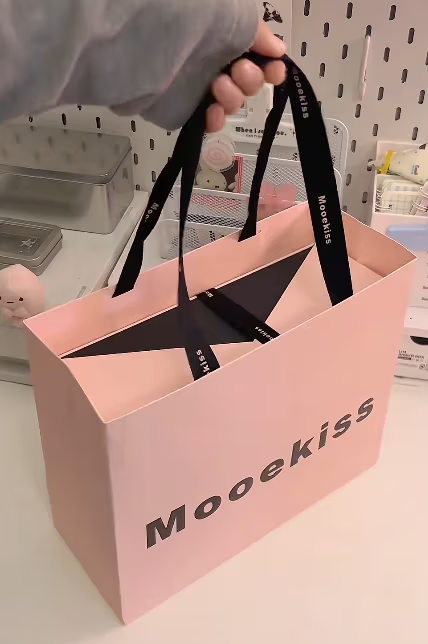
Check where the proposed component will actually be seen. A shopping bag supplied after checkout and a carton displayed beside competing products have different jobs. Test shelf changes under comparable stock, placement and promotion conditions; a different shelf position can overwhelm the effect of a new design.
Ordinary ecommerce orders: prioritize the shipment and the receiving task
For an order shipped directly to the customer, first ask whether the current pack fits, protects and opens conveniently. A better-sized structure or insert may have more practical value than extra printing. A label, card or restrained branding can then add identity without requiring a complete presentation system.
Explore custom mailing boxes when a fitted shipping format is the main task. Compare the complete packed dimensions, packing time and delivery costs. Check whether the product box still needs an outer shipper.
If the customer first sees the packaging after delivery, changing it cannot cause that same order’s checkout conversion. It may affect the receiving experience, complaints or future behavior. To study purchase conversion, the packaging offer must be visible before checkout, and the comparison needs a separate design.
Choose an investment level before choosing finishes
Customization can start with a small element. The following levels are options to compare, rather than a sequence every brand must eventually complete.
| Investment level | A useful starting condition |
|---|---|
| Stock protective pack with a label or card | Demand or artwork is still changing, or the main need is basic identification. |
| Custom-printed box or sleeve with a simple insert | Consistent branding or product fit has a defined role and the order economics support it. |
| Full presentation set with coordinated components | Gift readiness or a specific display experience is part of the offer, with sufficient contribution and usable demand. |
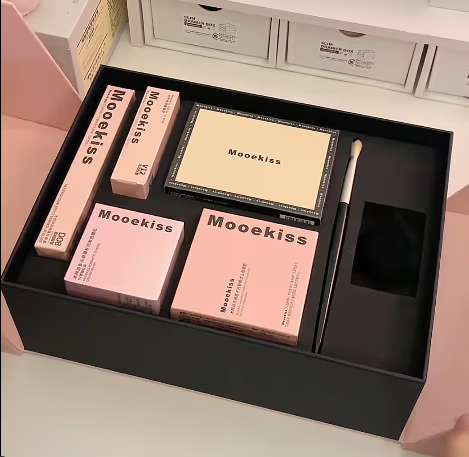
Keeping the lower-cost option can be the right outcome. There is little value in ordering a large quantity of highly specific packaging if the product range or artwork is about to change.
Calculate the extra cost of the whole system
Compare the proposal with the packaging you would otherwise use. Include the box, insert, ribbon, bag, labels and other components, plus design or setup charges. Add differences in assembly, packing labor, inbound freight, storage, outer shipping materials and delivery charges where they apply.
Show the cash needed for the full order separately from the cost of packaging consumed. Unsold seasonal boxes or obsolete artwork can leave paid stock that the business cannot use. Avoid making a large order appear cheaper simply by spreading its setup charge over an optimistic sales forecast.
A practical branded packaging ROI comparison asks whether the added contribution and verified savings exceed that extra cost. If the savings from fewer replacements are already included in the contribution calculation, do not add them again.
Illustrative break-even calculation, not an SLD quote or a measured result: suppose 500 upgraded packs add $0.60 each and the run requires an additional $100 setup charge. Assume other costs are unchanged and every pack is used. The additional cost is 500 × $0.60 + $100 = $400.
If an additional future order would contribute $20 after its own product, packaging and variable fulfillment costs, recovering that $400 would require 20 additional orders, assuming no other benefits or savings. This is a hurdle to test, not a prediction that the packaging will generate those orders. If packing or shipping costs also rise, the hurdle rises with them.
Run a small comparison before committing to a larger order
Write down one question, such as: “Does a branded sleeve improve the receiving experience enough to justify its additional cost on repeat deliveries?” Comparing a small change makes the decision easier to interpret than changing the box, product, discount and delivery service together.
- Choose one customer group and one channel. Keep the product, price, promotion and delivery service consistent. Separate gift orders, new customers and replenishment buyers when they have different tasks.
- Define version A and version B. A is the current suitable pack; B is one clearly specified upgrade. Both must meet the product’s protection requirements. Record what changes and the actual cost of each version.
- Allocate comparable customers randomly. Assign each eligible customer once and keep that assignment consistent during the test. Where shipping region or order type differs materially, randomize within comparable groups. This applies the control-and-randomization principle described in NIST’s experimental-design guidance.
- Set the primary measure, quantity and observation window in advance. Choose the main outcome you need to assess. Allow both groups the same time after delivery, including the applicable return window and a normal reorder opportunity where relevant. A small pilot can reveal packing problems and collect feedback, but may be too small to detect differences in rare returns or repeat purchases.
- Ask the same neutral questions. For example: “Was anything difficult to open or remove?” and “Was any packaging unnecessary or missing?” Send the same request at the same stage and record how many customers responded.
- Compare costs and outcomes together. Report counts with their denominators, note fulfillment mistakes or stock issues, and decide whether to retain, simplify or test the upgrade further.
For a retail shelf trial, allocate versions randomly across comparable stores where feasible, with equivalent placement, selling periods, stock and promotions recorded. Keep those results separate from a delivery experiment: customers encounter the packaging at different stages.
What to record for both versions
| Measure | Record and interpret it this way |
|---|---|
| Packing and delivery cost | Actual components, packing time and shipment charges per comparable order. |
| Damage and returns | Counts and denominators, with damage, wrong item, fit, preference and other reasons separated. |
| Opening feedback | The same questions, response counts and comments about access, organization and unnecessary material. |
| Repeat purchases | Buyers who reorder within the same follow-up window divided by comparable buyers with that full window available. |
| Contribution | Net sales less the specified product, packaging, fulfillment and other variable costs, with refunds and replacements counted once. |
For the delivery pilot, compare contribution per originally assigned customer over the same follow-up period, including those who do not reorder. If using the result to assess a larger run, subtract any additional one-time costs once at that scale. For a separate pre-purchase test, use all assigned visitors as the denominator, including those who do not buy.
Compliments and social posts can explain what people notice, but do not convert them into assumed sales. Likewise, zero damage in a small pilot does not establish a zero-damage rate, and a short test of a long-replenishment product cannot settle retention.
Choose a decision rule before reviewing the results: expand only when the economic evidence and operational checks justify the commitment; simplify or continue testing if the evidence is unclear. No detected difference in a small pilot is not proof that the options are equivalent. Keeping a suitable simpler pack while gathering better evidence is a valid decision.
Contact SLD Packing with the sales channel, average order value, quantity, current packaging and the problem you want to solve. Ask for a basic branded option and a fuller presentation option under the same product and delivery requirements, so the investment levels can be compared clearly.