
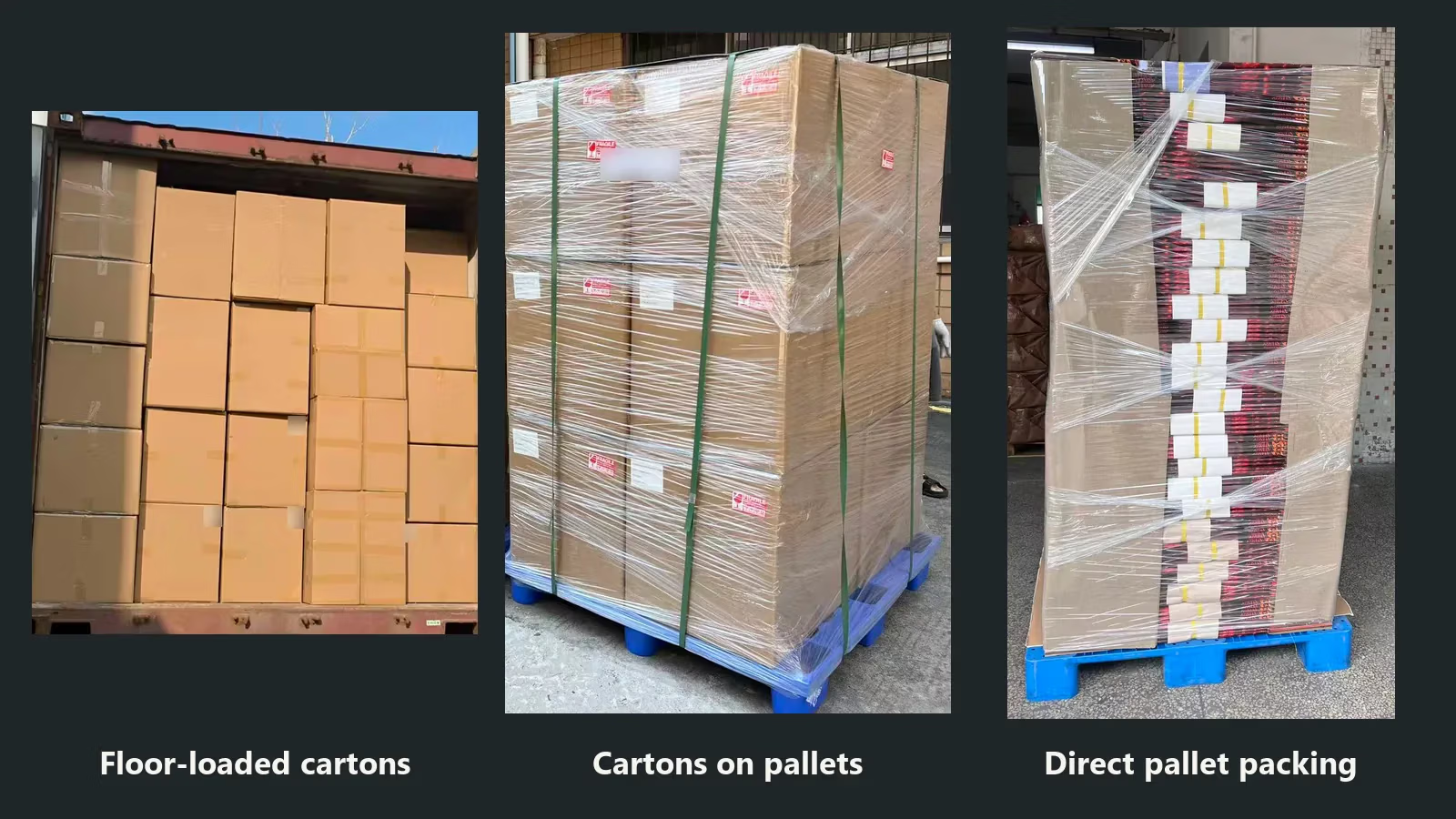
Choose floor-loaded cartons if your receiving warehouse can unload individual cartons and the container layout fits more of your order that way. Choose cartons on plastic pallets if the warehouse receives by pallet and your finished boxes need an outer carton. For flat-packed packaging that stacks evenly, direct pallet packing can work when the receiver accepts it and the edges and corners are protected before wrapping.
Here, the cargo is the custom paper packaging itself, such as finished gift boxes or flat-packed cartons. A master carton is the outer corrugated shipping carton that holds multiple units of that packaging.
Three bulk packing options at a glance
| Packing method | When to choose it | What to confirm |
|---|---|---|
| Floor-loaded 5-ply corrugated cartons | The receiver accepts loose cartons and the load plan makes good use of container space. | Carton count per container and labor for unloading. |
| 5-ply corrugated cartons on plastic pallets, stretch-wrapped | The receiver wants pallet handling and the packaging needs a protective outer carton. | Loaded pallet dimensions, gross weight, and receiving limits. |
| Direct on plastic pallets, with edge and corner protection and stretch wrap | Flat packs form an even, stable stack and the receiver accepts pallets without master cartons. | How the edges and corners are protected and whether the stack shifts or shows pressure marks. |
1. Floor-load 5-ply corrugated cartons
Pack the finished packaging into 5-ply corrugated master cartons, seal them, and load the cartons directly into the shipping container. With no pallet bases taking up height, this method can leave room for more cartons. The actual gain depends on the carton sizes, stack height, and container layout. Ask for a carton count based on the planned arrangement.
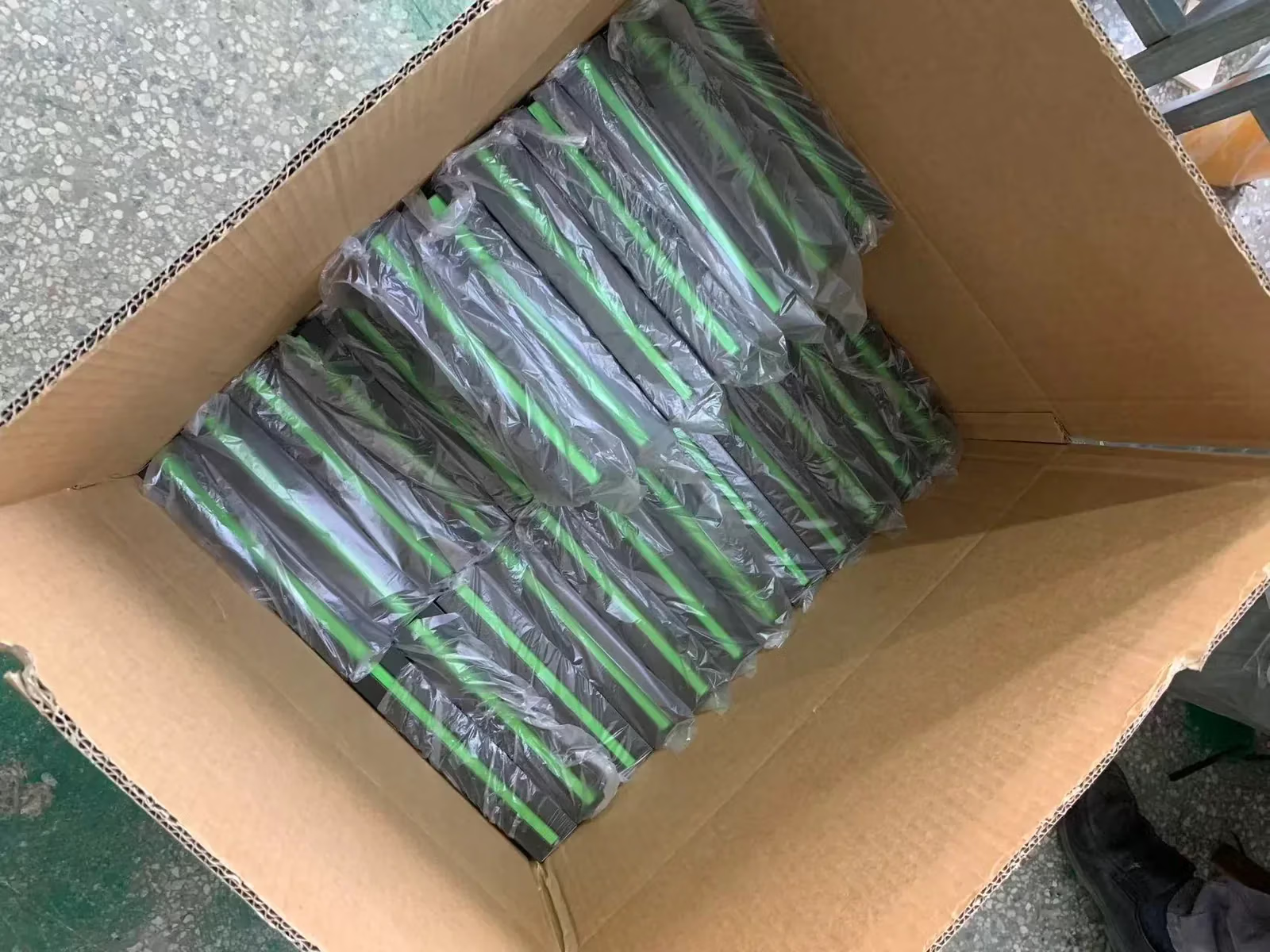
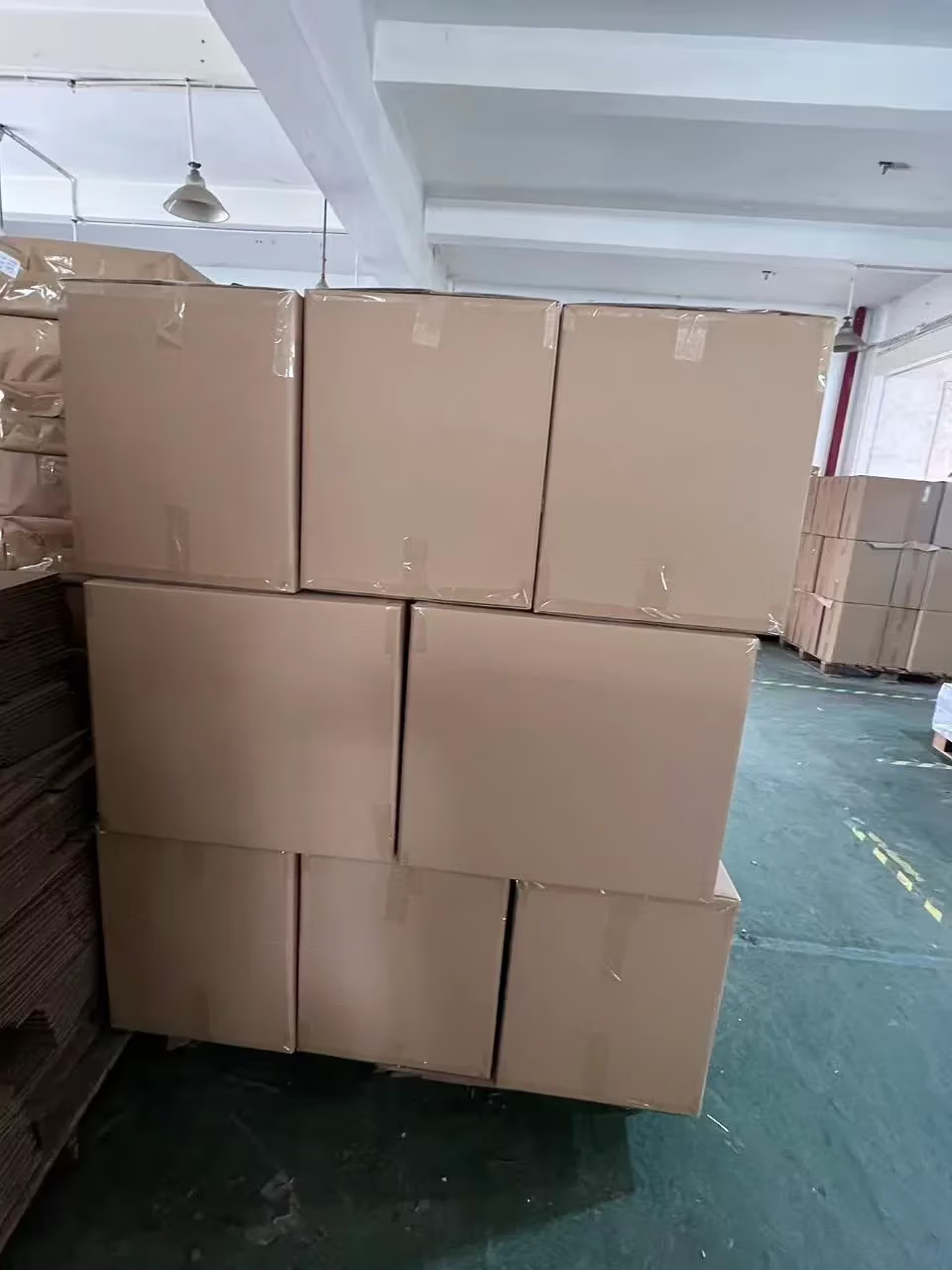
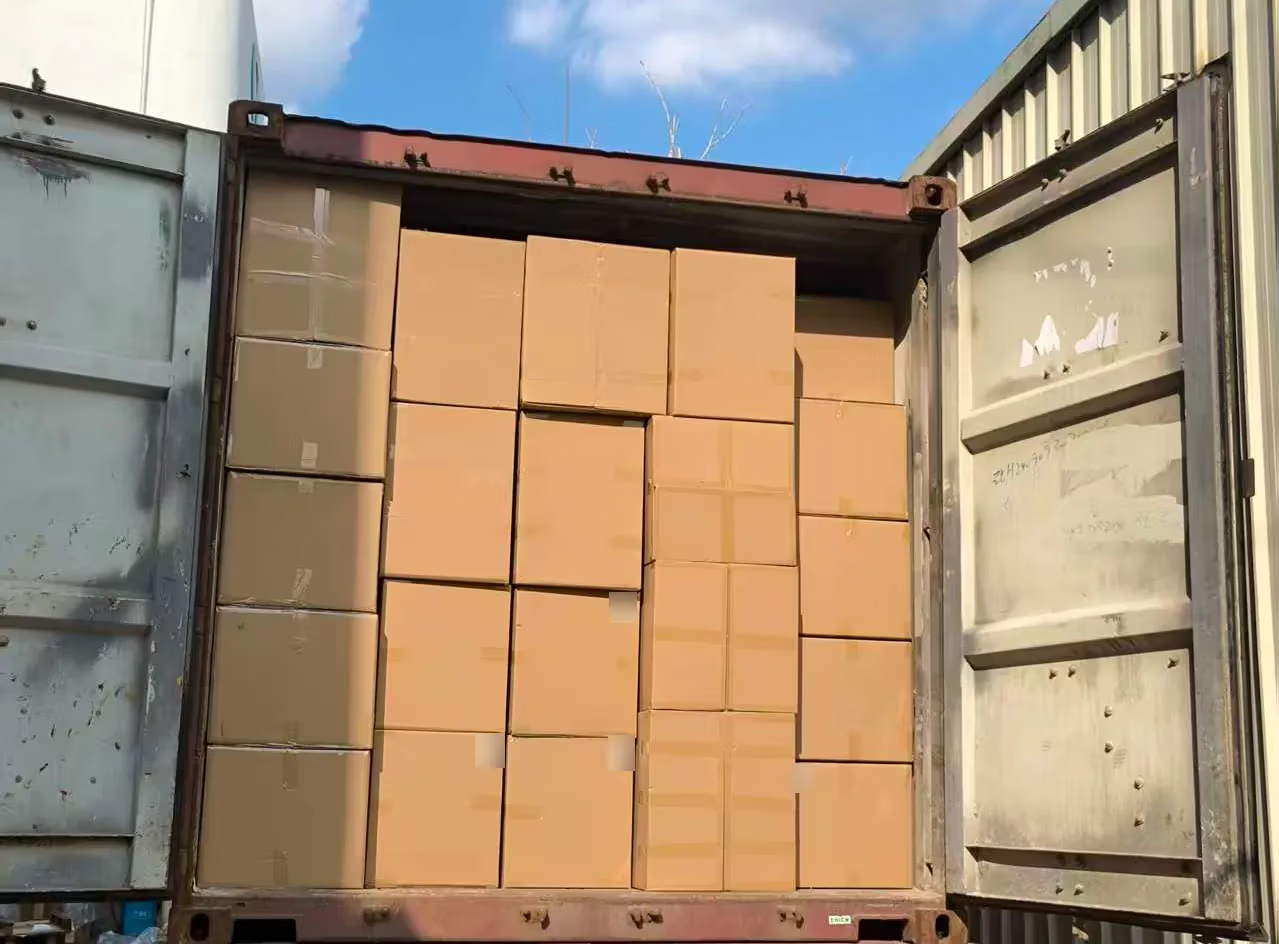
Check the receiving dock first. Even if more cartons fit, a warehouse that must unload, count, and rebuild them onto pallets may spend more time on the delivery. Compare the planned units per container and the unloading cost for the same order. On the packing side, confirm the weight of a full carton, the intended stack height, and whether the bottom cartons and the boxes inside can handle the load above them. Five-ply corrugated board has three liners and two fluted layers. This construction is called double-wall corrugated board. Carton size, board grade, and stacking conditions still matter.
2. Stack 5-ply corrugated cartons on plastic pallets
Pack and seal the same type of master cartons, stack them on plastic pallets, and wrap each load with stretch film. This keeps the outer carton around each group of boxes and lets an equipped warehouse move the load by pallet. It can also make counts easier when the packing list shows the cartons and units on each pallet.
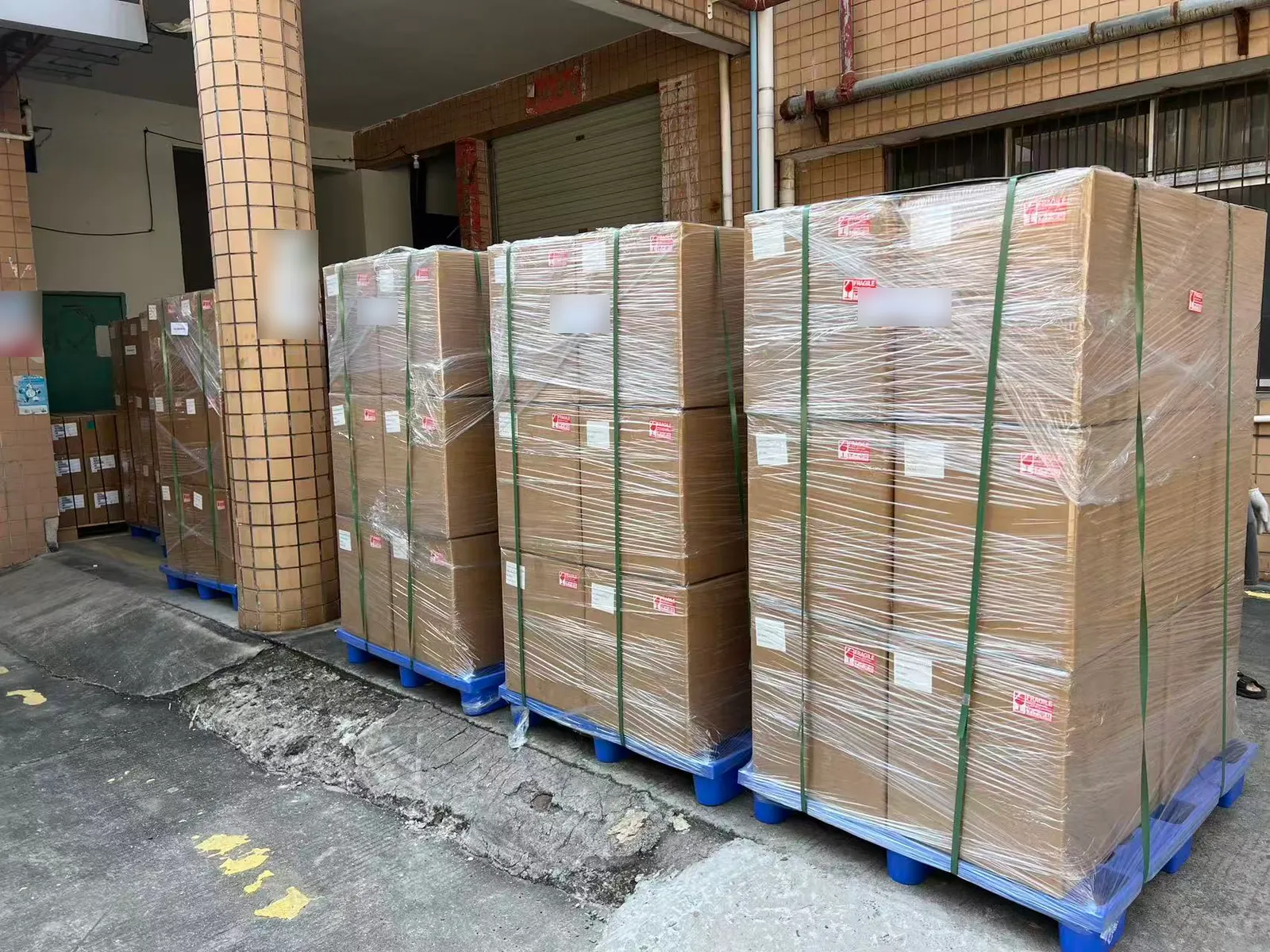
Give the receiver the loaded dimensions and gross weight, including the pallet base. Check the footprint and height against the receiver’s dock and storage limits. Cartons should fit within the pallet footprint so their edges are supported. Ask for a layout showing cartons per layer, layers per pallet, and pallets per container. That makes any loss of loading capacity visible before you approve the shipment.
3. Pack directly on plastic pallets and protect the edges and corners
Stack the packaging on plastic pallets without master cartons. Fit edge and corner protection before applying stretch wrap. Consider this method for flat-packed items that form an even stack. It removes the outer cartons, so the exposed edges and corners need protection against rubbing, pressure from the wrap, and knocks during handling.
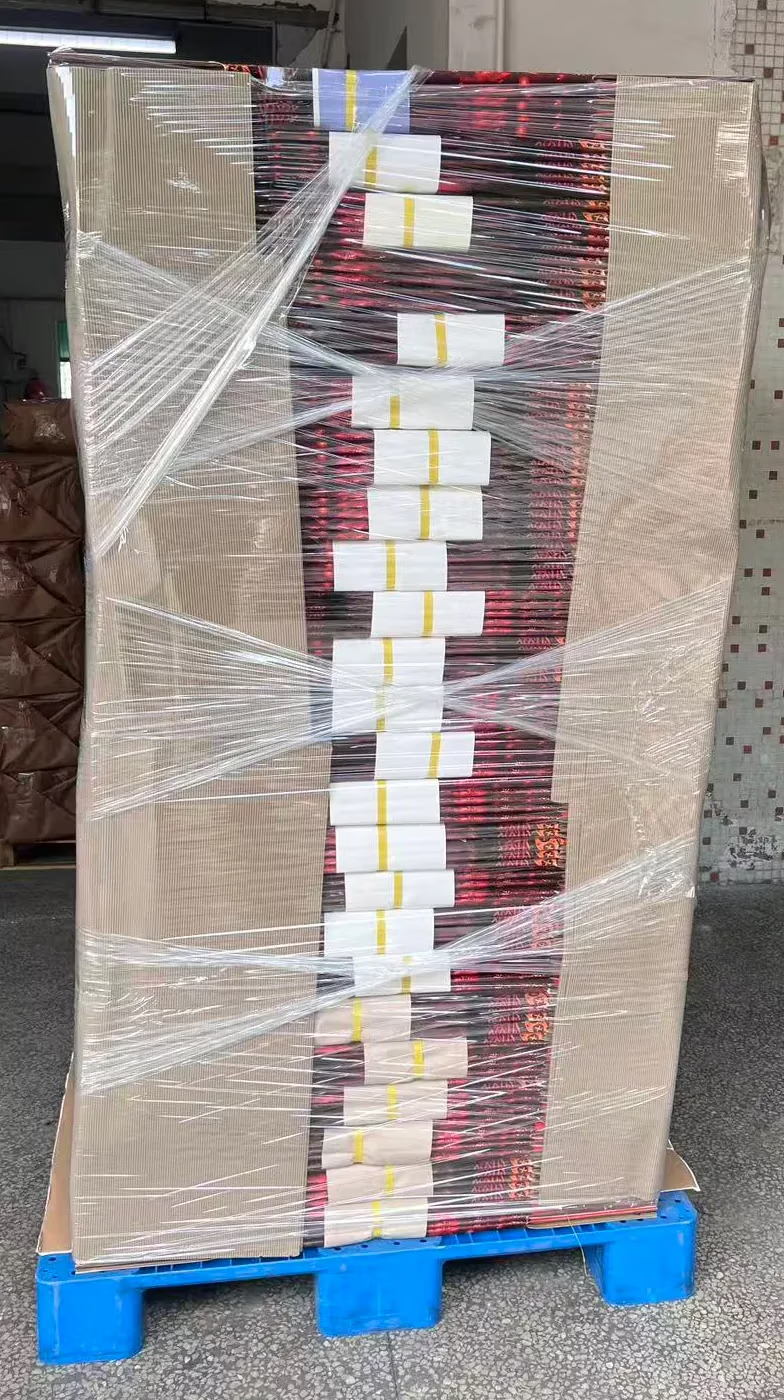
Ask for photos of a full trial pallet before and after wrapping. Before wrapping, check that the protectors cover the exposed edges and corners, the base supports the stack, and no units overhang the pallet. After wrapping, check whether the protectors have shifted and inspect units at the outer corners for dents, scuffs, or film pressure marks. If the stack is uneven, the finish marks easily, or the receiver requires cartons, use master cartons on pallets.
Stretch wrap holds the stack together as a unit. The loading team still needs to secure the cargo inside the container. Confirm the load layout and how the loading team will address gaps and movement. See the IMO, ILO, and UNECE container packing guidance.
What to confirm before approving the packing method
- Packaging details. Share the quantity by SKU, finished dimensions, whether the packaging ships assembled or flat, and which finishes or corners are prone to marking. If the box design is still open, see how folding and preassembled magnetic boxes differ in shipping and assembly.
- Receiving requirements. Ask whether the warehouse accepts loose cartons, requires palletized delivery, or accepts direct pallets without master cartons. Confirm any pallet footprint, height, weight, and labeling limits.
- Packing details for the same order. Compare units per carton or pallet, packed dimensions and gross weight, and the planned carton or pallet count per container. Include unloading or re-palletizing in the comparison.
- Approval photos. Write the chosen method on the purchase order or packing specification. Review a representative packed carton or a full trial pallet. For direct pallet packing, request close-ups of the edges and corners before the film goes on.
Send SLD Packing your order details and warehouse requirements to discuss which packing method fits your packaging and how it will be received.