
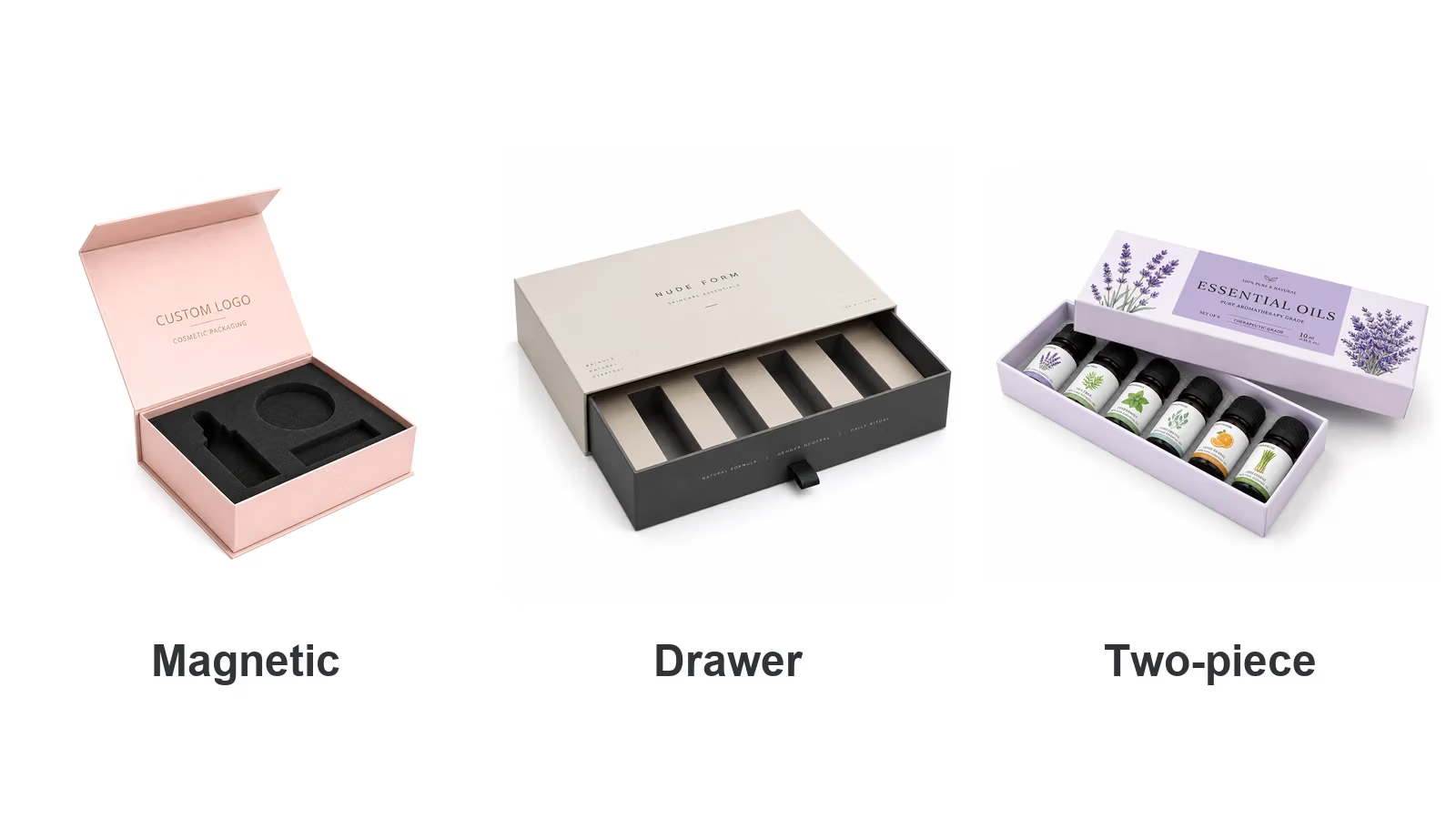
Choose a magnetic box when you want the lid to stay attached and frame the products as it opens. Choose a drawer box when a sliding reveal suits the set and the tray can be secured for handling. Choose a two-piece box when a removable lid and straightforward access work better for your packing and retail routine.
For cosmetics, the insert and shipping pack matter as much as that opening action. A beautiful box is a poor choice if a pump presses against the lid, a heavy jar shifts inside, or the customer struggles to lift out a bottle.
Start with the finished products, sales channel and packing process. Then compare the three structures against the same brief.
Compare the three opening styles first
| Decision | Magnetic box | Drawer box | Two-piece box |
|---|---|---|---|
| Opening action | Hinged lid stays with the box | Inner tray slides out of a sleeve | Lid lifts away from the base |
| Useful starting point | PR kits, gifts and sets with an inside-lid message | Compact gift sets with a deliberate product reveal | Retail gift sets that need open access from above |
| Space to check | Lid movement and space above or behind the box | Tray pull-out distance and where the box is held | Space to lift and put down the separate lid |
| Fit detail to approve | Loaded insert height, lid clearance and closure alignment | Sleeve-to-tray fit, pull attachment and product retention | Lid-to-base fit, lift-off feel and product removal |
| Cost items to compare | Closure components, construction, wrapping and assembly | Sleeve, tray, pull detail and assembly | Lid and base construction, wrapping and fit |
| Shipping decision | Confirm protection and closure in the complete shipping pack | Check whether the tray needs restraint inside the shipper | Check how the lid stays in place inside the shipper |
These are starting points, not exclusive uses. All three can work for a skincare gift set. None is automatically the cheapest, most protective or easiest to recycle just because of its name.
Magnetic boxes: choose them when the attached lid has a job
A magnetic box is worth considering when the open lid helps present the set: an introduction to the routine, application steps or a short gift message can remain visible while the products sit in the base. The recipient does not need to find somewhere to put a separate lid.
That makes it a useful starting point for a cosmetic launch kit or a gift set intended to be opened on a table. But a hinged lid also needs room to move. Check the full opening action on the shelf, counter or packing station where the box will be used.
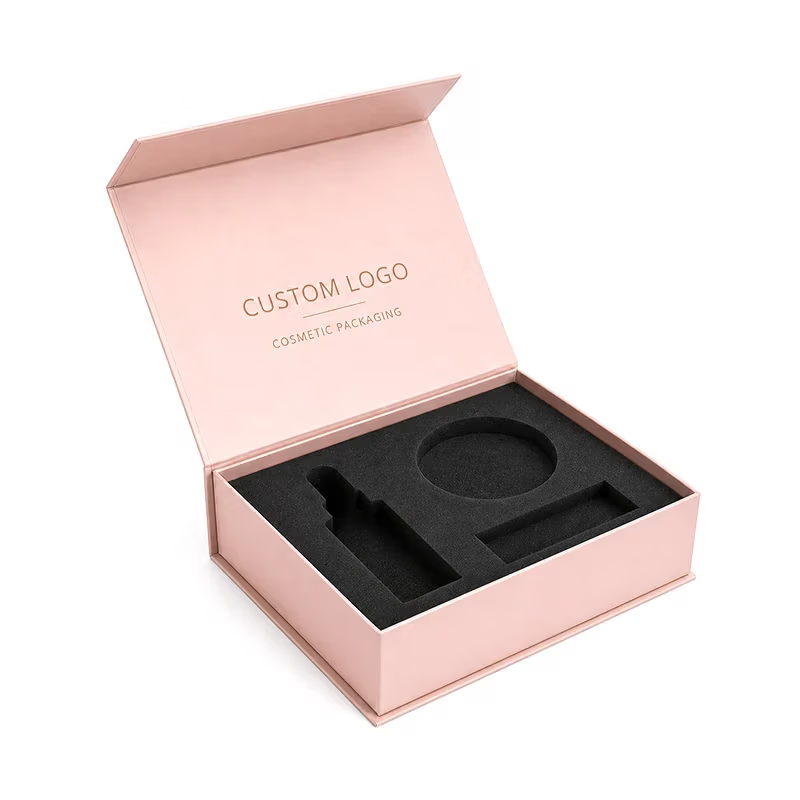
Before approving a custom magnetic gift box, check it with the finished products loaded. The insert, bottle caps, pumps and any information card must clear the lid and flap. A closure that works on an empty box may behave differently when the contents sit too high.
Also confirm the delivery format. Some magnetic structures can be supplied flat; others arrive assembled. Ask how the specific insert will be packed and fitted. Do not assume that choosing a magnetic closure means the entire packaging system folds flat.
Drawer boxes: approve the slide, not just the appearance
A drawer box creates a different sequence: the customer holds the sleeve and pulls the tray to reveal the products. It can suit a compact skincare collection or discovery set where the arrangement deserves a gradual reveal.
The practical questions are easy to overlook. Can someone grip the pull comfortably? Is there enough space to draw the tray out? Does the tray remain controlled as the weight moves toward the front?
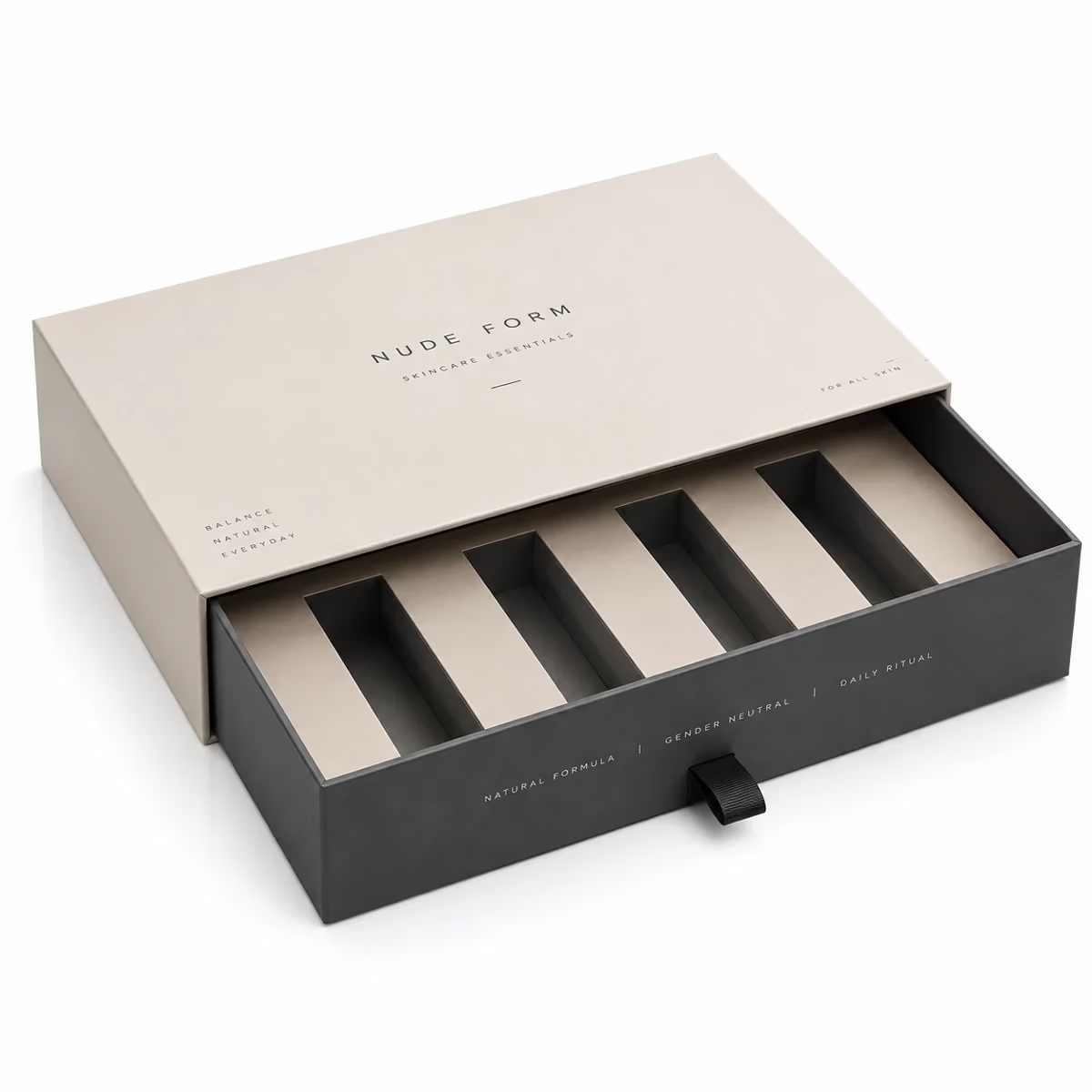
For custom drawer gift boxes, test the slide with the complete set inside. A tray that feels smooth when empty can feel different with glass bottles or a jar loaded. Check the fit after wrapping and finishing, not only at the bare-board stage.
The sleeve is not a substitute for an insert. If the customer tilts the box, products still need suitable retention. For a set that will be stored upright or sent by courier, confirm the orientation and any tray restraint in the finished shipping pack. A ribbon pull is for opening the tray; it should not be treated as a carrying handle unless that use has been designed and checked.
Two-piece boxes: simple access still needs careful fit
A two-piece, or lid-and-base, box opens from above. Once the lid is removed, the full tray is accessible. This can be convenient at a beauty counter, during gift packing, or when customers need to see and select several items together.
There is no magnetic closure or sliding sleeve to specify, but that does not make the job automatic. Lid depth, paper, wrapping, insert construction and fit still affect the result.
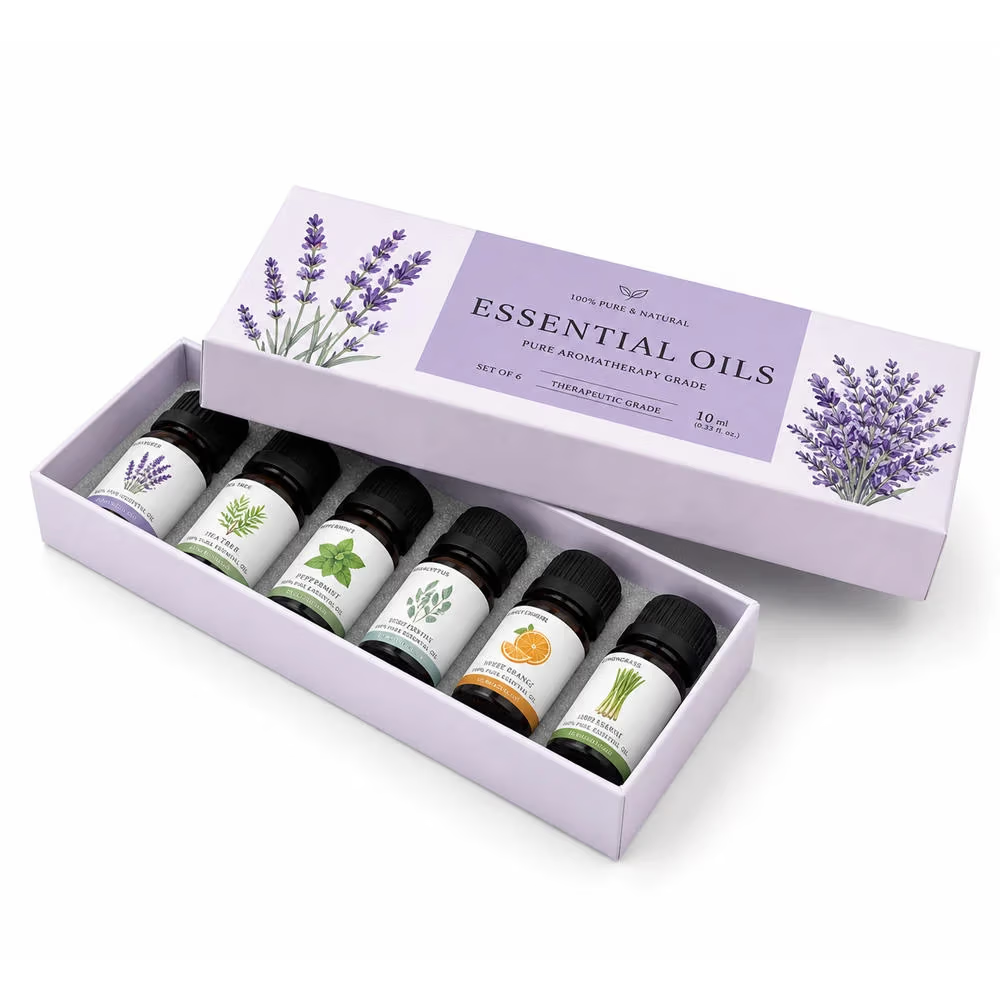
On a custom two-piece rigid box, try removing and replacing the lid several times. It should feel appropriate for the intended user without pulling the base up unexpectedly or sitting so loosely that normal handling separates the parts. Agree the desired fit using a physical sample.
Then lift out each cosmetic item. A neat row of bottles can look convincing from above while leaving too little finger access. If the lid will be put aside at a counter, include that extra handling space in the decision.
Keep the cosmetic set constant when comparing quotes
If one quote includes a printed paper insert and another includes a fitted foam insert, the difference is not just “magnetic versus drawer.” The packaging specification has changed.
Ask suppliers to work from one product list and the same requirements:
- Finished product dimensions and weights, including caps, pumps, labels and any protective wrapping.
- Product positions, quantities per set and preferred removal method.
- Ask each supplier to state the internal space, board, wrap paper and artwork coverage assumed in its quote.
- Insert material, construction and whether it arrives fitted or separately packed.
- Printing, inside printing and each surface finish.
- Order quantity per design, sample scope and one-time tooling or setup charges.
- Delivery format, quantity per shipping carton and carton dimensions.
- Delivery destination and the same quoted shipping scope.
Compare the total cost to receive and pack the set, not only the box unit price. A flat-delivered design may take less storage space but require more work at your packing station. An assembled box may be quicker to fill but occupy more freight and warehouse volume. Get the actual packing data before deciding which trade-off helps your operation.
The insert often decides whether a cosmetic set works
The outer structure controls access. The insert controls where each product sits and how it is supported.
For a serum bottle, cream jar and tube, check more than whether the cutouts match the shapes. A jar needs support at its weight-bearing area. A pump or dropper needs clearance. A tube needs to stay in place without being squeezed into a position that makes removal awkward.
| Product or packing detail | What to confirm on the sample |
|---|---|
| Glass bottle or jar | Supported position, movement and separation from neighbouring products |
| Pump, spray or dropper | Clearance from the lid and insert, without unintended pressure |
| Printed label or decorated surface | Where the insert touches it and whether loading or removal leaves marks |
| Small or closely spaced items | Finger access and a clear removal direction |
| Several product combinations | Whether one layout genuinely fits them, or needs a different insert |
| Extra leaflet or gift card | Its final position, so it does not interfere with the closure or product fit |
Do not specify one universal clearance for every material and cosmetic container. Product variation, insert construction and contact surfaces affect the fit. Send representative finished products, and agree which sample will be the reference for production.
Approve the loaded sample before production
Use the finished cosmetic products, not just a visual mockup. Work through this short check with the person who will pack or handle the sets:
- Load every item. Include labels, caps, pumps, leaflets and the final insert. Check the agreed dimensions and orientation.
- Open and close it repeatedly. Look for rubbing, catching, misalignment or contact with the products.
- Remove every product. Check grip, removal direction and whether a neighbouring item is disturbed.
- Check the intended handling positions. Use the agreed packing and display orientations to assess movement. This is a fit check, not proof of transit performance.
- Run a packing trial. Confirm which parts arrive assembled and who fits the insert, loads the products and closes the pack.
- Review the complete shipping pack. Agree any testing or trial shipment appropriate to the actual route. A magnetic flap, drawer sleeve or lift-off lid alone does not prove courier suitability.
- Record the approved version. Keep the structure, insert, artwork, finish and acceptance notes together. If a product or component changes, check whether a new approval is needed.
Send a brief that helps us compare the right boxes
You do not need to choose every material before asking for help. For an initial cosmetic packaging assessment, send the products or clear photos, finished dimensions and weights, quantity per design, sales channel, preferred opening experience, artwork status and delivery destination. Include your required arrival date and target budget if available.
If you are deciding between two structures, say so. Send your cosmetic set details to SLD Packing and ask for a comparison using the same product layout and delivery conditions. That gives you a more useful decision than three attractive boxes quoted to three different specifications.