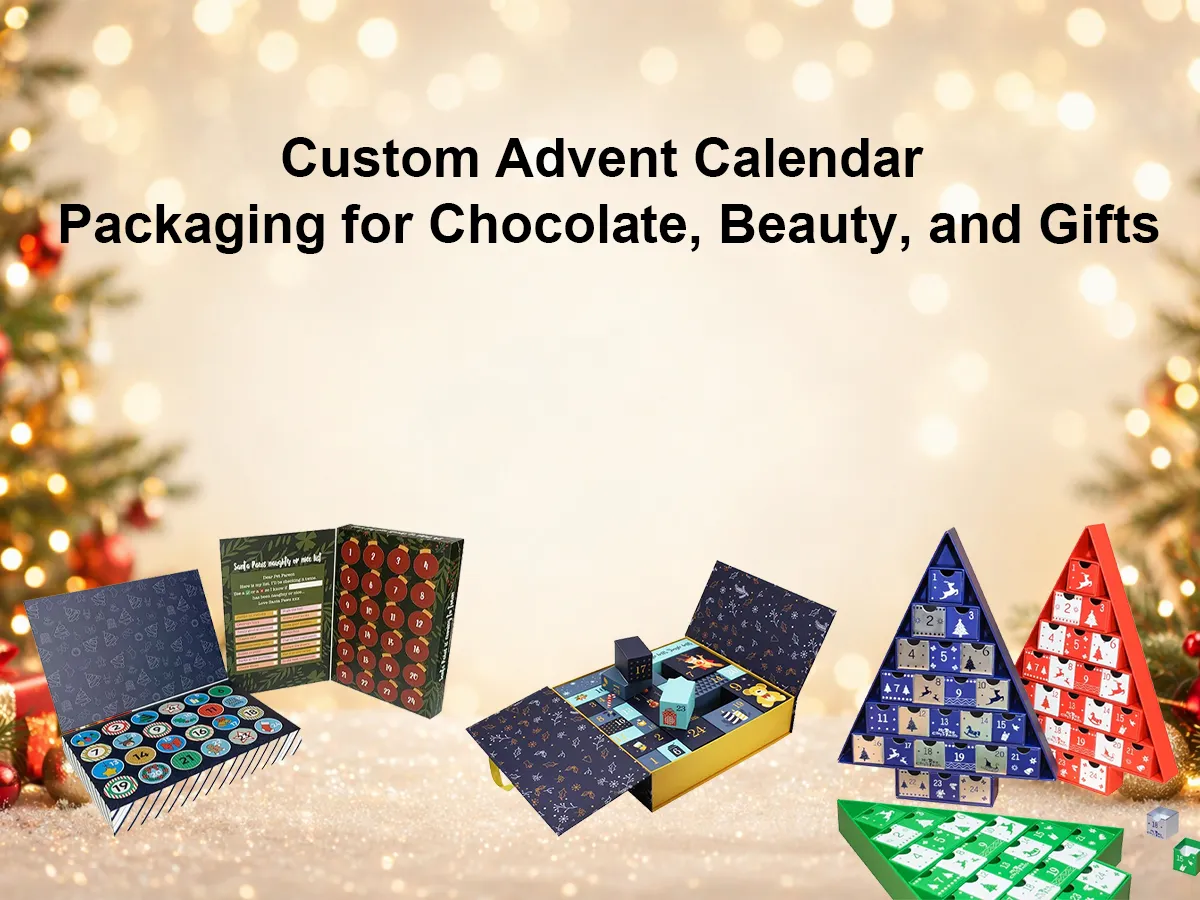
Custom advent calendar boxes are no longer limited to simple chocolate countdowns. In recent market coverage, advent calendars are described as a packaging-led experience, and the products inside now range from chocolates and cosmetics to candles, gifts, and other specialty items. That shift matters because buyers are not only choosing what to put inside the box, but also what kind of unboxing moment they want to create.
For most brands, the choice usually comes down to three directions. The first is an economical flip-top folding box, often paired with a blister or plastic tray. The second is a more premium gift box format, such as a magnetic or double-door box with inner cartons or drawers. The third is a fully custom structure, where the box itself becomes part of the holiday experience through a unique shape or opening method. These three approaches cover most chocolate, beauty, and gift projects without making the buying process unnecessarily complicated.
What Is a Custom Advent Calendar Box?
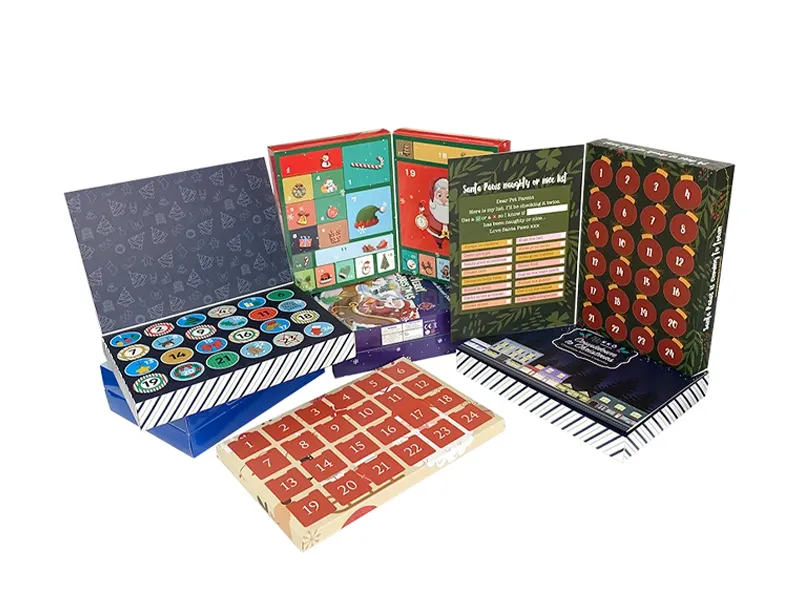
A custom advent calendar box is a paper-based package designed to hold a series of daily surprises, usually arranged in numbered compartments. In practice, it works as both product packaging and a seasonal marketing format. That is one reason advent calendars are now widely used outside traditional confectionery, especially in beauty, gifting, and promotional campaigns where presentation matters as much as the contents.
The structure usually combines an outer box, an internal tray or set of mini boxes, and decorative printing that supports the brand’s holiday theme. For food items, manufacturers commonly use food-safe blister inserts. For non-food items, paperboard inserts, fitments, or small inner cartons are often used instead. This basic structure sounds simple, but the right combination has a big effect on cost, packing speed, protection, and how premium the final product feels.
The 3 Most Common Advent Calendar Box Styles
1) Flip-Top Folding Box
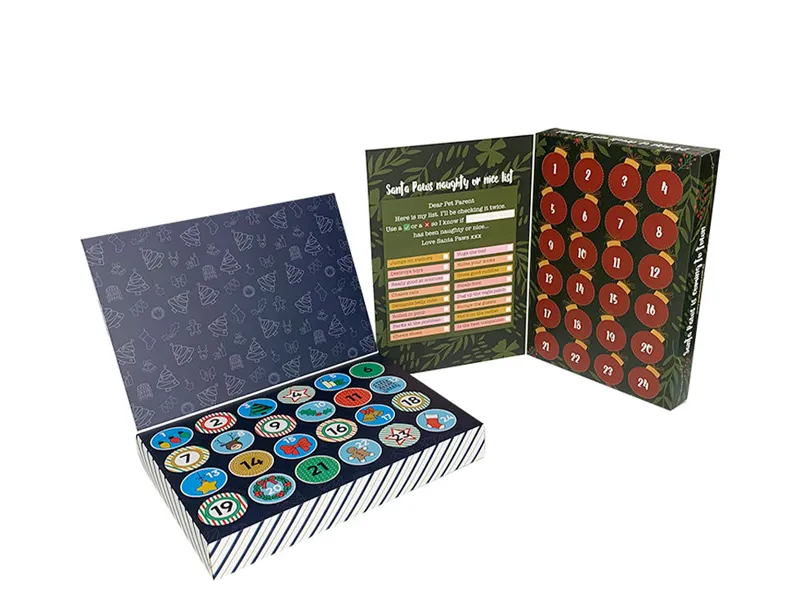
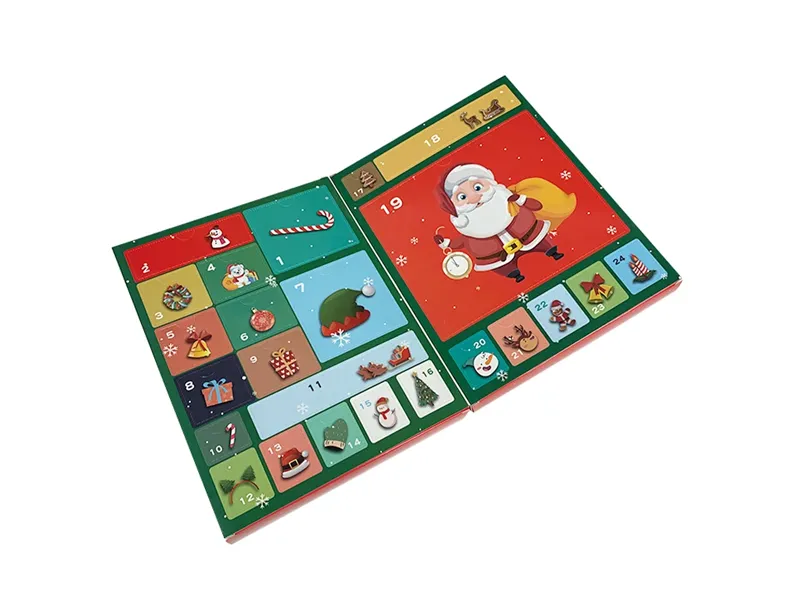
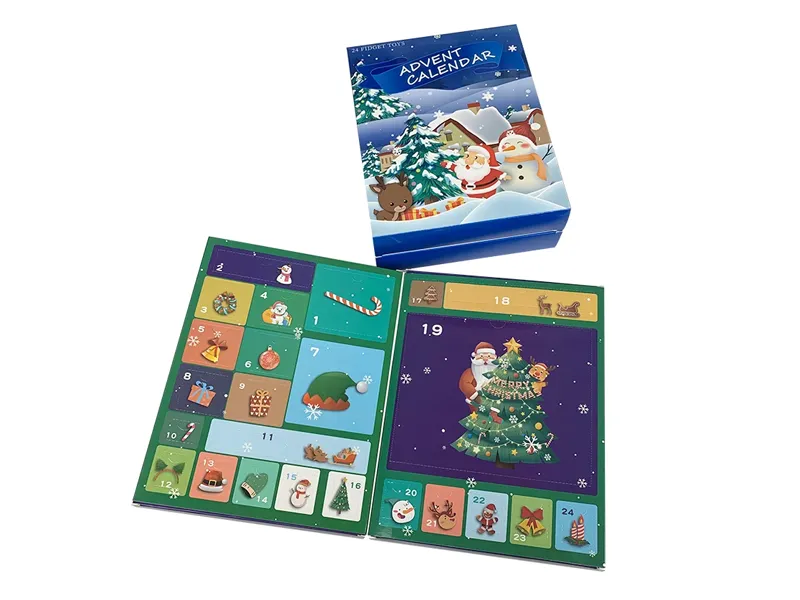
A flip-top folding box is usually the most straightforward and cost-conscious option. Folding cartons are valued for their customizable shapes, strong print quality, and ability to ship and store flat, which helps reduce storage pressure before packing starts. That makes them a practical choice for larger seasonal runs, especially when the project needs clean graphics and reasonable cost control.
For chocolate and other lightweight products, this style is often paired with a blister tray or insert. That setup helps keep cavities consistent, improves packing efficiency, and makes it easier to organize multiple small pieces in a neat 24-day layout. It is a practical structure, not a flashy one, but for many mass-market holiday launches, that is exactly the point.
2) Gift Box Style: Magnetic or Double-Door Box
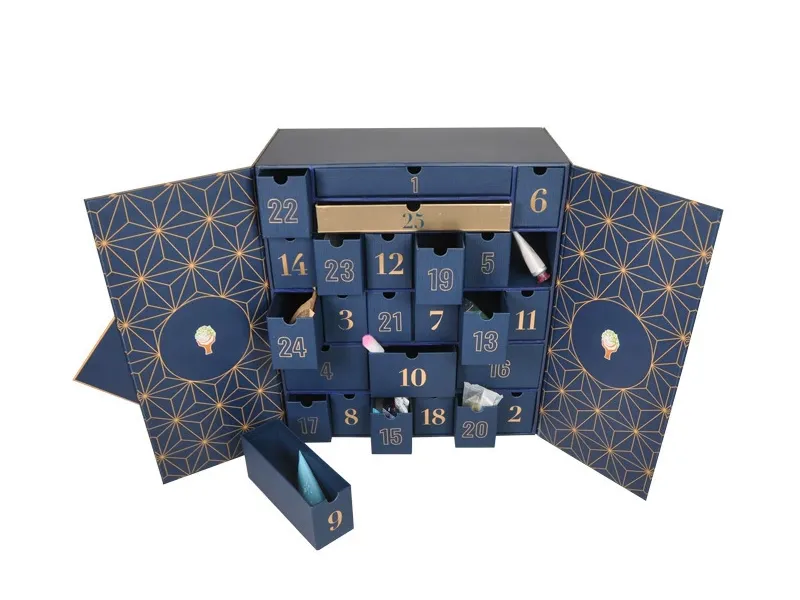
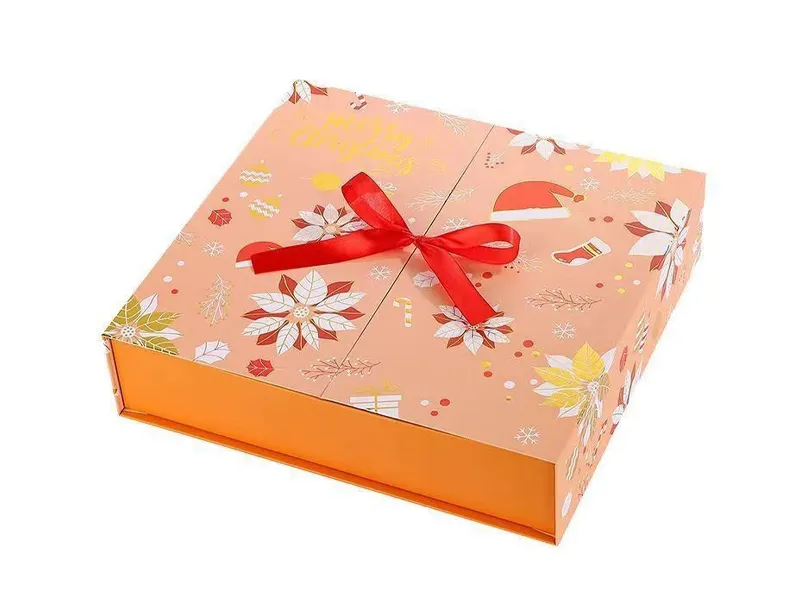
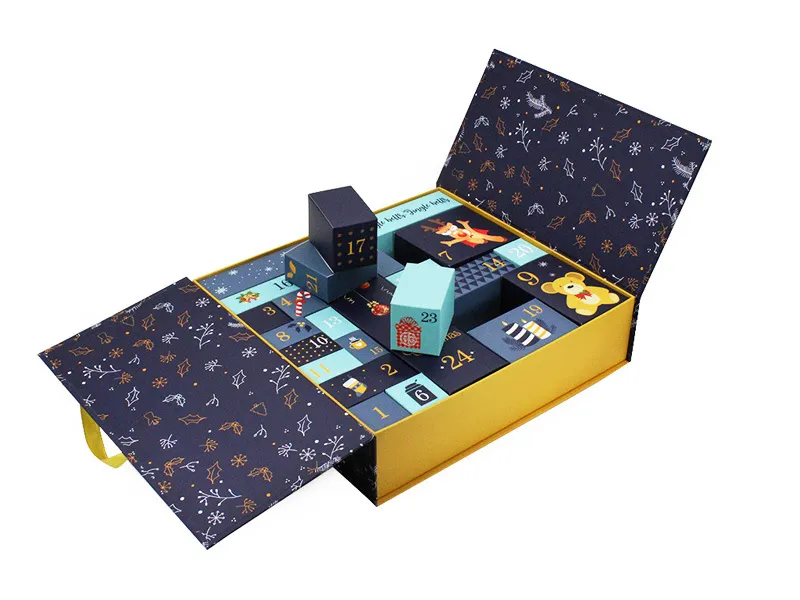
A magnetic or double-door advent calendar sits in the premium middle ground. Rigid boxes are built for stronger protection and a more luxurious presentation, and they can include magnets, ribbons, hinges, and other details that make opening the box feel more special. For brands selling higher-value products, this style often gives a better balance of protection and perceived value than a simple folding carton.
This format is especially common for beauty, skincare, and premium gifting. Beauty packaging trends continue to emphasize durability, tactility, and finishes such as matte textures and embossing, because packaging helps signal value before the customer even tries the product. That makes rigid advent calendars a strong fit for serums, mini bottles, mixed-size cosmetics, and curated gift assortments.
3) Unique Custom Structure
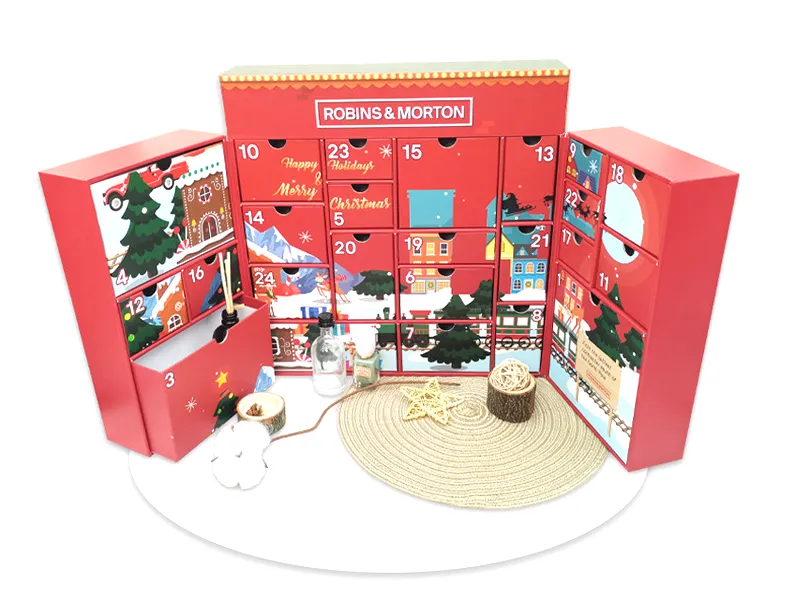
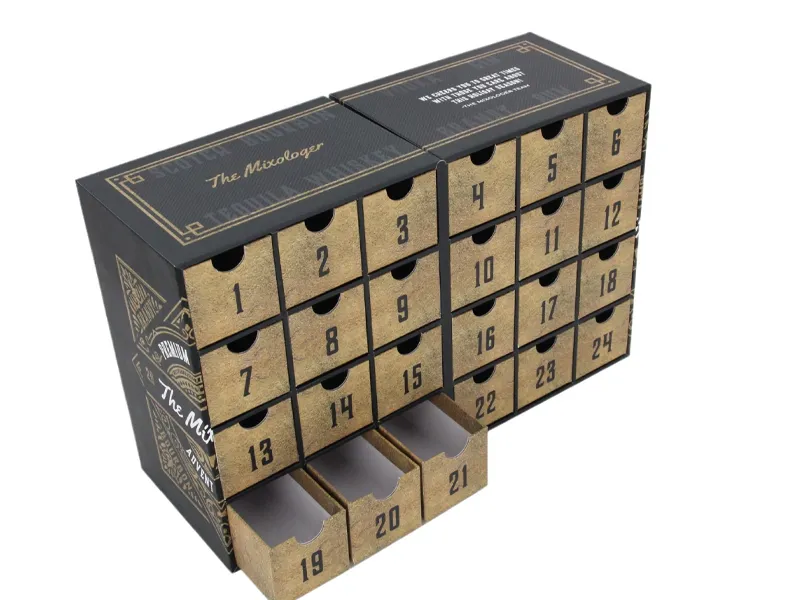
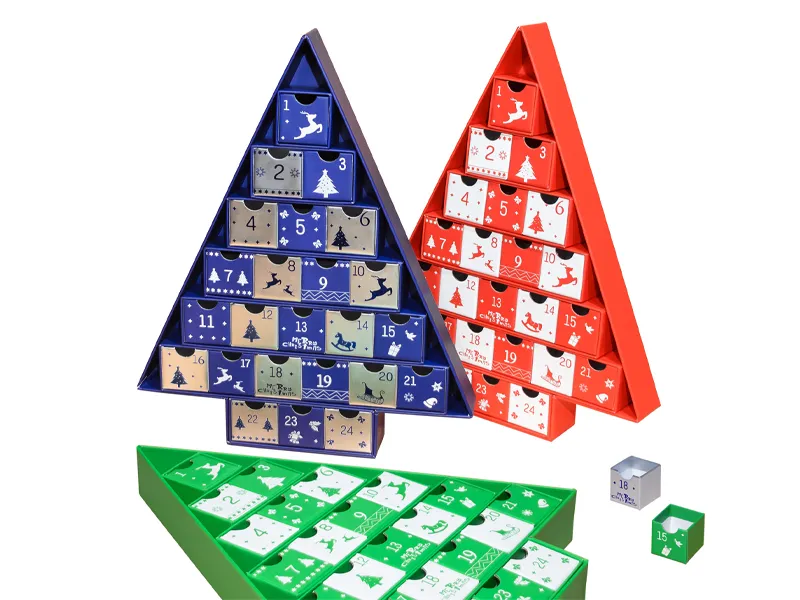
The third route is a unique custom structure. This can include drawer-style calendars, book-style formats, tree-shaped structures, house-shaped boxes, and other engineered designs that create a stronger reveal. In this category, the packaging is no longer just a container. It becomes part of the campaign itself.
Unique structures usually work best when shelf impact, gifting value, or brand memory matter more than keeping the design simple. They can be very effective, but they also tend to require more structural development, more careful packing logic, and a higher budget. In other words, they are ideal for brands that want a standout holiday format, but they are rarely the cheapest path to market.
Table 1: Quick Comparison of Advent Calendar Box Styles
| Style | Best For | Price Level | Visual Impact | Packing Complexity | Typical Insert Option |
|---|---|---|---|---|---|
| Flip-top folding box | Chocolate, candy, lightweight gifts | Low | Moderate | Low to moderate | Plastic blister tray or simple paper insert |
| Magnetic / double-door gift box | Beauty, skincare, premium chocolate, gift sets | Medium to high | High | Moderate | Inner folding cartons, drawers, or fitments |
| Unique custom structure | Brand campaigns, mixed gifts, premium launches | High | Very high | High | Mixed-size boxes, drawers, custom fitments |
This comparison is a practical buying guide rather than a fixed market rule. Folding cartons are typically favored for flat-packing, print flexibility, and efficiency, while rigid boxes are chosen for stronger protection, premium finishes, and more memorable unboxing. Unique structures build on those same rigid-box strengths but add more engineering and development work.
How to Choose the Right Advent Calendar Box for Your Product
For Chocolate
Chocolate projects usually depend on consistency. The cavities need to be clean, the pieces need to stay in place, and the pack-out process needs to be efficient. That is why food-safe blister inserts remain a common choice for chocolate advent calendars. They help separate pieces clearly and support fast filling on repeat layouts.
A folding format is often enough for standard chocolate calendars, especially when the products are light and the project is price-sensitive. A rigid magnetic or double-door box starts to make more sense when the chocolate is positioned as a premium gift, when the pieces are larger, or when the outer packaging needs to feel closer to a keepsake than a standard seasonal carton.
For Beauty and Skincare
Beauty advent calendars usually involve more variation in size and weight. A project may include vials, sample sachets, jars, bottles, and tools in the same box. That makes structural support more important than it is for simple confectionery packs. At the same time, beauty packaging often carries part of the brand story, so finish quality and tactile details matter more.
For that reason, rigid gift-box structures and well-supported inner boxes are often the safer choice for beauty. They handle mixed product sizes better, reduce the risk of loose movement, and create a more premium first impression. Strong folding cartons can still work, especially with the right insert design, but they usually need more attention to fit and load distribution.
For Gifts and Mixed Items
Gift advent calendars tend to be the least standardized. One box may hold jewelry, accessories, stationery, toys, tea, candles, or a mix of novelty products. In that situation, the main issue is not just protection. It is compartment logic. If the product sizes vary too much, a standard tray can become awkward very quickly.
That is where inner mini boxes, drawers, or a custom engineered structure usually perform better. They allow different cavity sizes, make hand packing easier, and often give the calendar a more gift-like feel. For mixed assortments, a flexible internal structure is usually more important than chasing the lowest box price.
Key Packaging Decisions Before Production
Box Size and Compartment Layout
Before choosing a finish or decorative effect, the product list should be locked first. The size and weight of every item will affect cavity depth, box thickness, opening method, and the final shipping footprint. This step sounds basic, but it prevents one of the most common mistakes in advent packaging: approving artwork before the internal layout really works.
It also helps to decide early whether the calendar needs equal compartments or mixed-size compartments. Equal cavities are faster to plan and pack. Mixed-size compartments are more flexible, but they add structural complexity. For beauty and gift projects, that trade-off matters more than many buyers expect.
Insert Options
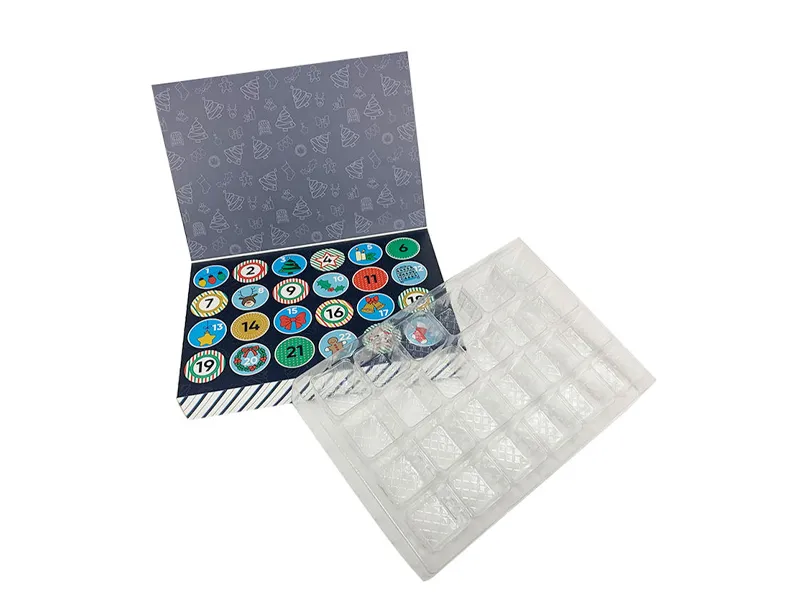
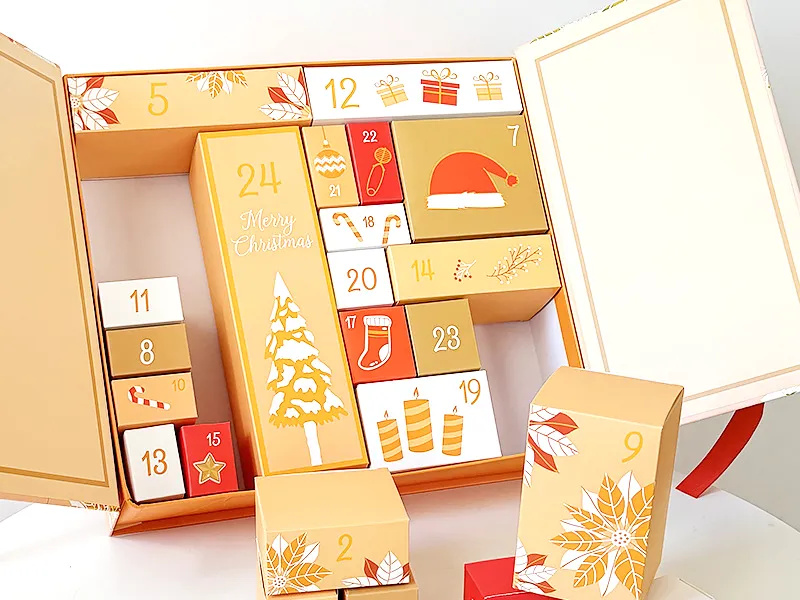
The insert is not a small detail. It is the part that actually holds the products in place. Plastic blister trays are often practical for chocolates and other small repeated items. Paperboard inserts are useful when a project wants a more paper-based solution. Individual mini boxes or drawers work well for mixed items or higher-end gifting because they can handle different sizes more cleanly.
A weak insert can make a good-looking calendar feel cheap very fast. Doors will not align well, products can rattle, and hand packing becomes slower than expected. In most projects, the internal fit matters just as much as the outer artwork.
Materials and Board Strength
If the goal is storage efficiency, a folding carton has a clear advantage because it can be supplied flat and assembled later. If the goal is stronger protection and a more luxurious feel, rigid board is usually the better option. Neither is automatically right or wrong. The better material is the one that matches the product weight, insert design, shipping method, and target price.
Paper-based structures can also support lower-plastic packaging strategies, but buyers should look at the full bill of materials rather than the outer box alone. A calendar may still include magnets, ribbon pulls, windows, or plastic fitments, so the final structure should be reviewed as a whole, especially if sustainability is part of the launch message.
Printing and Finish Options
Advent calendars are highly visual products, so finish selection matters. Folding cartons and rigid boxes both support a wide range of decorative options, including foil stamping, embossing, debossing, UV effects, lamination, textured finishes, and premium matte surfaces. These details can move a calendar from functional to gift-worthy without changing the core structure.
That said, finishes should be chosen with some discipline. Too many decorative effects can push cost up without making the box look better. In practice, one or two strong finishing choices usually outperform a long list of effects fighting for attention on the same panel.
Cost Differences Between Advent Calendar Box Styles
In broad terms, flip-top folding boxes are usually the most economical option. They benefit from flatter supply, simpler structures, and efficient printing. That makes them a sensible entry point for chocolate calendars, promotional gifting, and projects where fill cost already takes up a large share of the total budget.
Magnetic and double-door boxes usually sit above that level because rigid construction adds material, labor, and assembly steps. In return, they offer better product support and a more premium presentation. For many beauty and premium gift projects, that trade-off is worth it because the box itself contributes to perceived value.
Unique custom structures usually cost the most. The price increase does not come from one single factor. It usually comes from a combination of custom engineering, more sample rounds, more hand assembly, more complex inserts, and slower packing. That is why it makes sense to reserve this route for launches where brand differentiation is worth paying for.
Common Mistakes to Avoid When Ordering Custom Advent Calendar Boxes
One common mistake is choosing the outer style before confirming product size and weight. A box can look perfect in a mockup and still fail once the real products are packed. Another mistake is underestimating the insert. Buyers often focus on graphics first, even though the insert is what controls fit, protection, and packing speed.
Another issue is making the structure too complex for the budget. A dramatic opening style may look impressive, but if it adds too much labor, slows assembly, or makes shipping awkward, it can hurt the project more than it helps. The strongest advent calendars usually balance appearance, protection, and production reality.
Late planning is also a frequent problem. Seasonal packaging demand builds early, and packaging suppliers repeatedly warn that Christmas projects should be planned months in advance. Even when factory production itself is relatively fast after design confirmation, the full project still needs time for concept approval, sampling, revisions, mass production, and shipping.
Production Timeline: When Should You Start for Christmas 2026?
For Christmas 2026, early planning is the safer move. Some manufacturers list standard production around one to two weeks after design confirmation for simpler advent projects, but that does not include the full lead time needed for development, sampling, corrections, and logistics. Seasonal demand adds another layer of risk, especially once many brands start booking holiday packaging at the same time.
A realistic schedule usually starts with concept and budgeting, then moves into structural design, white sample or printed sample approval, production booking, mass production, and freight planning. The more custom the structure, the more important it is to build in review time instead of assuming everything will work on the first sample.
Table 2: Simple Planning Timeline for Christmas 2026
| Stage | What to Confirm | Recommended Timing |
|---|---|---|
| Concept planning | Product list, budget, target style, quantity estimate | April to June 2026 |
| Structural design | Box format, cavity sizes, insert method, opening style | May to July 2026 |
| Sampling | White sample, printed sample, fit test, artwork approval | June to August 2026 |
| Mass production booking | Final spec, production slot, QC checkpoints | August to September 2026 |
| Shipping and delivery | Freight method, warehouse arrival date, buffer time | September to November 2026 |
This timeline is a practical planning guide, not a universal promise, but the logic is simple: holiday packaging gets harder when everyone waits until the same late-season window. Starting earlier gives more room for sample revisions and reduces the chance that a small design issue becomes a delivery problem.
Conclusion
The best custom advent calendar box is not always the most expensive one. For chocolate, a flip-top folding box with a well-designed tray may be the smartest answer. For beauty, a magnetic or double-door rigid box often gives better protection and a stronger premium feel. For mixed gifts or brand-led launches, a unique custom structure can create the most memorable result, but it also asks for more time and budget.
The key is to choose the structure around the product, not the other way around. When the insert, board strength, finish, and filling plan all match the contents, the calendar feels better, packs more smoothly, and performs better as a holiday product. If you are preparing for Christmas 2026, now is a great time to start shopping.