Luxury packaging is supposed to look clean, sharp, and premium. But many boxes look perfect after printing and still end up with visible scuffs before they reach the customer. This is a common issue with rigid gift boxes, premium folding cartons, and paper bags, especially when the design uses dark colors or large solid printed areas. Scratch-resistant lamination is made for this exact problem. It helps the surface stay cleaner during packing, transport, shelf display, and daily handling.
In practice, the problem is usually not the printing itself. The damage often appears later, when finished packaging rubs against other boxes, outer cartons, inserts, tissue paper, or hands during packing and shipping. On black, navy, dark green, and other deep shades, those marks are easier to notice, so even light scuffing can make a luxury box look old or poorly made.
Why do luxury gift boxes scratch so easily?
Luxury boxes are touched more than many other packaging types. A rigid gift box may be assembled by hand, inspected, packed, stacked, shipped, unpacked, displayed, opened, and handled again by the end buyer. Premium paper bags go through the same kind of friction, especially when many units are packed closely together for transport. The more contact points a package has, the more chances it has to pick up rub marks.
Dark printed surfaces are the biggest warning sign. Scratch-resistant film suppliers specifically note that scratches, scuffs, fingerprints, and handling marks are a particular challenge on dark or black printed surfaces. That is why black luxury boxes, dark perfume boxes, and deep-color paper bags are often the first items to show problems when a standard finish is used.
Another reason is expectation. A simple shipping carton can survive a few marks without anyone caring. A luxury gift box cannot. In cosmetics, jewelry, electronics accessories, and similar categories, the box is part of the product experience. If the lid looks rubbed or the paper bag looks worn, customers often read that as lower product quality.
What is anti-scratch film?
Anti-scratch film is a lamination layer made to improve resistance to scuffs, scratches, and handling marks. In simple terms, it acts like an extra protective skin over the printed surface. The goal is not to make the box impossible to damage, but to reduce the surface wear that usually appears during normal movement through the supply chain.
Many anti-scratch films are chosen because they keep a premium matte look while adding better durability than a regular matte film. Some gloss versions also exist, but in luxury packaging the matte-style anti-scratch finish is the more common choice because it protects the box without losing the quiet, upscale look that many brands want.
This finish is especially useful for packaging that is frequently touched, stacked, transported, or displayed for longer periods. Common examples include electronics packaging, hardcover slipcases, beauty packaging, gift boxes, and dark paper bags used for events or retail.
Anti-scratch film vs. regular matte or gloss film
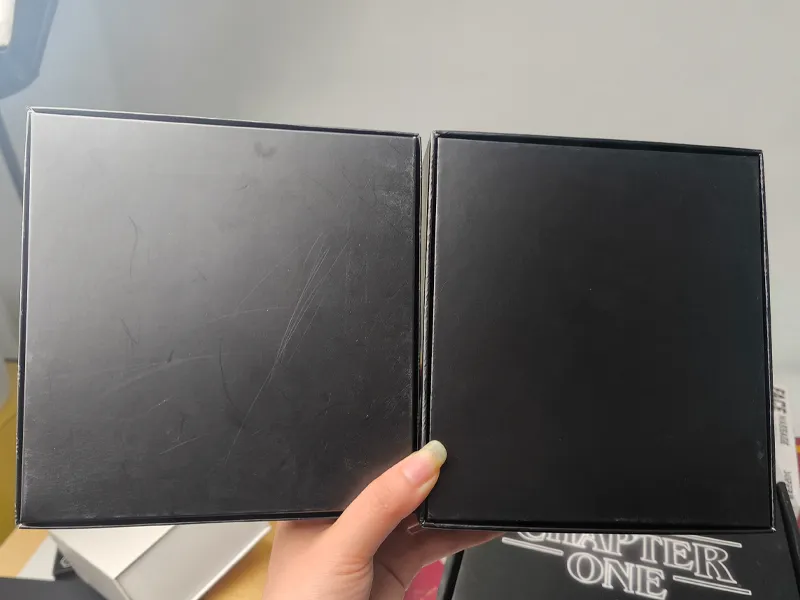
Regular matte lamination is still a good finish. It looks elegant, feels refined, and works well for premium branding. But it has limits. Compared with gloss, matte can reduce color vibrancy slightly and may scratch more easily, especially on dark designs where marks become obvious very fast.
Gloss lamination offers a different advantage. It brightens colors, increases contrast, and gives the surface a more reflective, energetic look. It also provides useful protection against moisture and surface wear. The drawback is that gloss can show fingerprints and smudges more easily, and the shine does not always match the visual style of luxury packaging.
Anti-scratch film usually sits in the middle of that decision. It keeps the more premium matte-style appearance many luxury brands prefer, while adding stronger resistance to scuffs, fingerprints, and frequent handling. That is why it is often recommended for high-touch packaging rather than standard matte or gloss.
The table below gives a quick comparison of the three options based on common packaging use cases and manufacturer guidance.
| Finish | Surface Look | Scratch / Scuff Resistance | Good For | Watch Out For |
|---|---|---|---|---|
| Anti-scratch film | Usually matte or low-sheen | High | Dark luxury boxes, premium paper bags, high-touch retail packaging | Higher cost than standard film |
| Regular matte film | Soft, elegant, non-reflective | Medium | Premium boxes with lighter colors or lower handling | Scuffs can show more clearly on dark surfaces |
| Gloss film | Shiny, bright, color-enhancing | Medium to medium-high | Colorful retail boxes, photo-heavy artwork, general protection | Glare, fingerprints, less subtle luxury feel |
No finish is perfect in every case. The exact result also depends on paper type, ink coverage, film grade, and how the packaging is packed and shipped. Still, as a practical buying rule, anti-scratch film is usually the safer option when the design is dark and the package will be touched often.
When should you choose anti-scratch film?
Anti-scratch film is a strong choice for matte black rigid boxes, dark-printed paper bags, premium cosmetic boxes, book-style gift boxes, and any packaging with large solid dark areas. These are the jobs where normal handling can quickly turn into visible wear.
It also makes sense when the packaging will spend time in stores or travel through e-commerce channels. Shelf handling, repacking, and long-distance shipping all add friction. If the box needs to look fresh after that journey, the finish should be chosen for durability, not only appearance.
Another good use case is multi-part rigid packaging. Two-piece boxes, magnetic closure boxes, shoulder boxes, and box sets create more contact between surfaces during packing and opening. That extra contact increases the chance of rubbing on corners, lids, and broad printed panels.
Is anti-scratch film always the best option?
Not always. If the design depends on bright colors, strong reflections, or photo-style printing, gloss may be the better visual match. If the box is light colored, handled only a little, and budget matters more than premium surface protection, regular matte or gloss can be enough.
That is why the best finish is not chosen by trend alone. It should match the design, the supply chain, the target price, and the level of handling the package will face. In many packaging projects, the smartest question is not “Which film looks best on screen?” but “Which film will still look good after production, shipping, and display?”
How to reduce scratches beyond lamination
Lamination matters, but it is only one part of the solution. Sampling before bulk production is one of the best ways to reduce finish problems. A real sample lets you check the paper, structure, dark ink areas, foil, embossing, and lamination combination before committing to a full run. Many packaging manufacturers recommend sample approval for exactly this reason.
Packing method matters too. A premium finish can still fail if boxes are packed too tightly, if lids rub during transport, or if outer cartons allow too much movement. Surface protection should always be reviewed together with stacking method, internal packing, and the shipping route.
Small decisions often help more than people expect. Protective tissue, cleaner assembly flow, separators between units, and better carton loading can all reduce rub marks. This is especially useful for paper bags and rigid boxes with broad dark panels, where even light abrasion becomes visible.
The table below shows a simple way to match film choice to packaging type. It is not a strict rule, but it works well as a starting point during design review.
| Packaging Situation | Recommended Finish | Why |
|---|---|---|
| Matte black rigid gift box | Anti-scratch film | Dark panels and luxury appearance make scuffs easy to notice |
| Dark printed paper bag | Anti-scratch film | Bags rub against each other during transport and carrying |
| Colorful folding carton with photo graphics | Gloss film | Better color pop and good general protection |
| Light beige or pastel luxury box | Regular matte film | Elegant look, while scuffs are usually less obvious |
| High-touch retail display box | Anti-scratch film | Repeated shelf handling increases surface wear |
| Budget-sensitive box with limited handling | Standard matte or gloss | Basic protection may be enough without upgrading finish |
Final answer
For luxury gift boxes, especially dark-printed boxes and premium paper bags, anti-scratch film is usually the better choice when surface marks are a real concern. It helps keep the clean, high-end look that premium packaging needs, while offering stronger protection during packing, transport, retail display, and customer handling. Regular matte and gloss still work in some cases, but when the main problem is scuffing, anti-scratch film is the finish designed to solve it.