Online packaging design platforms keep adding new AI features, but for real paper packaging projects, standard box types still do most of the heavy lifting. In corrugated packaging, the FEFCO code remains an internationally applied system for common box designs, which shows why standardized structures still matter in day-to-day packaging work. For packaging teams, standard structures are usually easier to quote, easier to sample, and easier to move into production.
That is why this article does not rank platforms based on AI alone. Instead, it looks at what matters more in a real workflow: standard templates, dielines, 3D previews, and practical support for cost control. For folding cartons, corrugated boxes, paper bags, and similar paper packaging products, these features are usually more useful than an AI-generated concept image.
The feature summary below is based on the platforms’ official pages.
| Platform | Direct access | Best for | Standard box types / templates | Dieline / preview support | Cost-control value |
|---|---|---|---|---|---|
| Pacdora | Visit Pacdora | Fast design work and quick visual validation | 3,000+ box templates | Downloadable dielines and 3D mockups | Good for fast early-stage decisions |
| Packly | Visit Packly | Custom sizes and smoother approval workflow | Tailor-made layouts from entered dimensions | Tailor-made dielines and interactive 3D preview | Good for reducing design errors |
| Die Cut Templates | Visit Die Cut Templates | Structural packaging work and estimating | 35,000+ vector packaging templates | Production-ready dielines, 3D mockups, nesting | Strongest for material and cost planning |
Why standard box types matter more than AI
AI can help with idea generation. It is useful for exploring graphics, color directions, or quick presentation visuals. But packaging production still depends on structure. A platform that starts with standard box types gives manufacturers a clearer path from concept to dieline, sample, and quote. That usually means fewer revisions and better cost control.
This is especially important in packaging manufacturing. A creative image may look good on screen, but production teams still need dimensions, fold lines, cut lines, and a box style that can actually be made. When a project starts from a standard structure, communication becomes easier between designer, supplier, and buyer.
1. Pacdora
Direct access: Pacdora Dielines
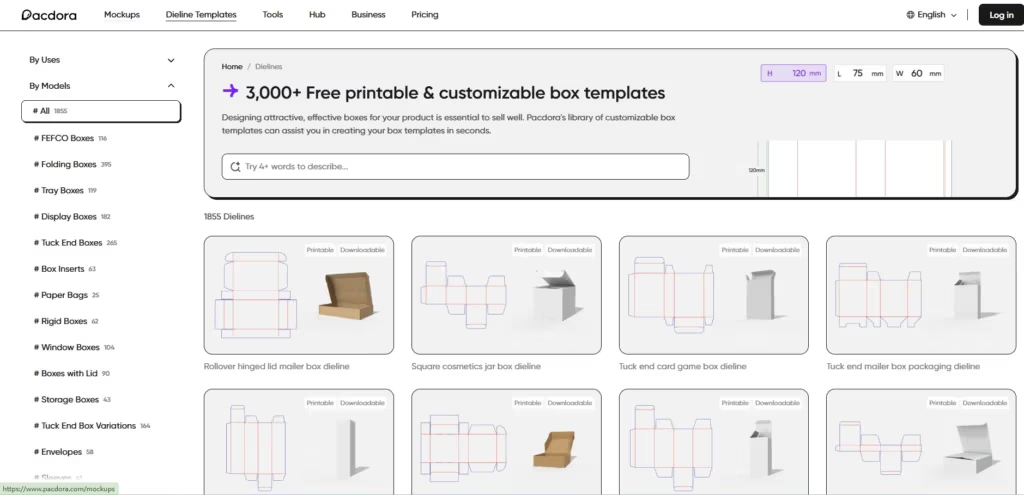
Pacdora is one of the easiest platforms to recommend for teams that want speed and a large ready-made library. Its official dieline page says it offers more than 3,000 printable and customizable box templates. Users can adjust size, material, and thickness, then download files in AI, PDF, or DXF format. The same workflow also supports 3D mockups, which makes Pacdora useful for both design presentation and early packaging development.
Pacdora does promote AI packaging design, but even there, the workflow still starts from a packaging mockup or existing structure. That is why Pacdora works best when AI stays in a supporting role. It can help teams move faster visually, but the real value is still in its standard templates, editable dielines, and strong mockup tools.
2. Packly
Direct access: Packly Packaging Design
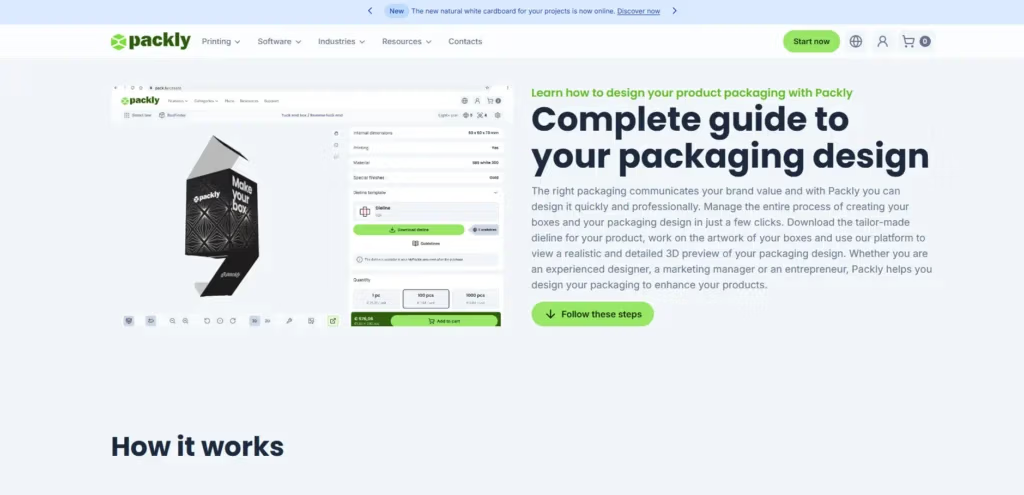
Packly is a practical choice for users who care about moving from structure to approval with less friction. Its official packaging design page says users can manage the box creation process in a few clicks, download a tailor-made dieline, add artwork, and review a realistic 3D preview. The main Packly site also highlights interactive 3D previews, custom dimensions, and easier sharing through a link, all of which help reduce approval mistakes.
Compared with more idea-first tools, Packly feels closer to a production workflow. It is a strong option for brands, designers, and packaging buyers who need custom sizing but still want a clear structural path. For standard cartons and corrugated boxes, that balance between customization and manufacturability is useful.
3. Die Cut Templates
Direct access: Die Cut Templates
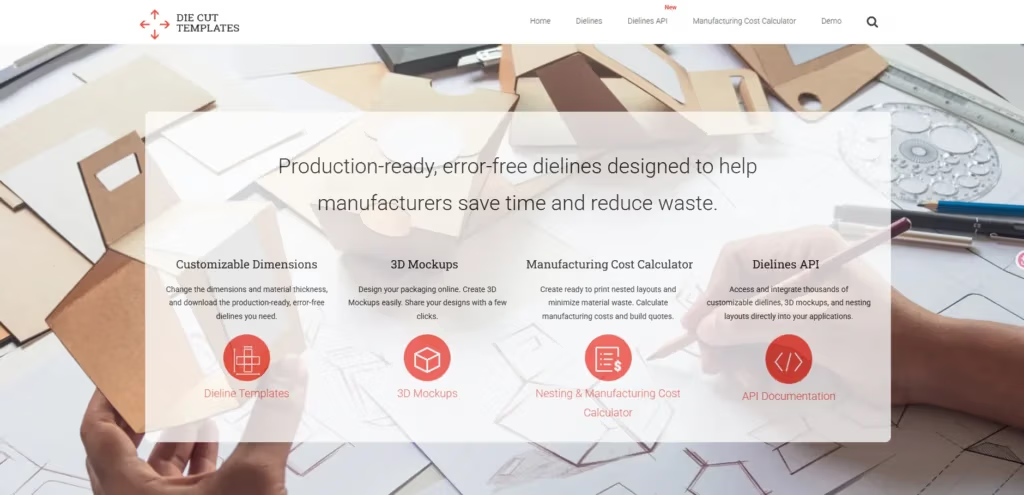
Die Cut Templates is the most manufacturing-focused option in this list. Its official site describes the platform as an online packaging template collection, custom dieline generator, and packaging design tool with nesting, 3D capabilities, and a manufacturing cost calculator. It also says the library includes over 35,000 vector packaging templates across cartons, corrugated packaging, rigid boxes, paper bags, and other structures.
This makes it especially useful for teams that care about structural variety and cost control. The nesting tools and manufacturing cost calculator are important because they help users think beyond appearance. Instead of only asking whether a box looks good, they help answer whether it can be produced efficiently and quoted with more confidence.
Which platform is best?
Pacdora is the best choice for fast visual work built on ready-made packaging templates. Packly is a better fit for users who want custom dimensions and a smoother path through design approval. Die Cut Templates stands out when structural detail, material planning, and cost awareness matter most.
For most packaging manufacturers, the safest path is still the same in 2026: start with a standard box type, create a workable dieline, review the 3D result, and then refine the graphics. That workflow is usually more practical than relying too heavily on AI-generated concepts from the beginning.
Final takeaway
The best online packaging design platform is not simply the one with the most AI features. It is the one that helps users move from idea to production with less confusion and better cost control. On that basis, Pacdora, Packly, and Die Cut Templates are three of the most practical platforms to recommend in 2026.
Many brands don’t just rely on online design platforms; they work directly with professional packaging manufacturers as projects approach prototyping or mass production. This is often a more efficient approach for paper packaging, as manufacturers can help check the structure, adjust die-cut lines, confirm print layout, and offer advice on surface treatments before errors lead to costly mistakes. For example, SLD Packing states that they support custom paper packaging projects such as boxes, bags, and cards, providing assistance with structural design, print layout and die-cut line settings, as well as guidance on coating and surface treatment details. In fact, this manufacturer support is just as important as the online platform itself, especially when the goal is successful production rather than just conceptual design.