1. Introduction: Why Certification Matters in Packaging
Today’s consumers expect more than just good design and sturdy materials—they want sustainability. For packaging buyers, that means choosing materials that are responsibly sourced and environmentally conscious. In a world where “eco-friendly” claims are everywhere, certification becomes the proof behind the promise.
This is especially true in the paper packaging industry. Whether you’re sourcing custom boxes, paper bags, or printed cards, knowing where your paper comes from—and how it was produced—matters more than ever. That’s where FSC certification plays a vital role.
2. What Is FSC Certification?
FSC certification is a globally recognized system that ensures products made from wood or paper come from responsibly managed forests or recycled sources. It is issued by the Forest Stewardship Council® (FSC), a non-profit organization dedicated to promoting environmentally sound, socially beneficial, and economically viable forest management.
For packaging buyers, this certification provides a clear and verifiable standard that confirms the material used in products such as boxes, paper bags, and cartons meets strict environmental and social criteria.
FSC certification ensures that:
- Materials come from forests that are legally harvested and sustainably managed
- Biodiversity, soil health, and water resources are protected
- Workers’ rights and the well-being of local communities are respected
- The product is traceable through every stage of the supply chain (via Chain of Custody audits)
In short, FSC-certified packaging helps buyers meet sustainability targets, improve transparency, and respond to growing consumer demand for eco-friendly solutions—especially in industries like food, cosmetics, fashion, and e-commerce packaging.
3. The Three Types of FSC Labels (And What They Mean)
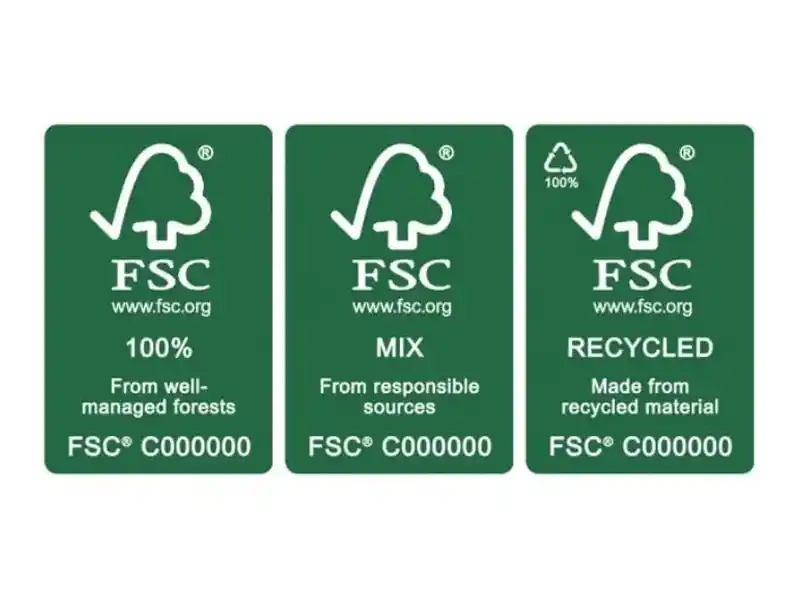
FSC labels help buyers understand where the material comes from and how sustainable it is. Each product that carries the FSC logo includes one of three certification types:
🌲 FSC 100%
What it means:
The material is sourced entirely from forests that are certified by the FSC. These forests meet the organization’s highest standards for environmental protection, social responsibility, and ethical logging practices.
Why it matters for buyers:
This label guarantees full traceability and is ideal for brands that want to demonstrate a strong, uncompromising commitment to sustainable sourcing.
♻️ FSC Recycled
What it means:
The product is made entirely from recycled fiber—either post-consumer (e.g. used paper) or pre-consumer (industrial scraps). No virgin forest materials are used.
Why it matters for buyers:
It supports the circular economy and reduces the environmental footprint by giving new life to paper that would otherwise go to waste.
🌱 FSC Mix
What it means:
The packaging contains a combination of FSC-certified material, recycled content, and/or “controlled wood” (non-certified but verified to avoid harmful sources like illegal logging or deforestation).
Why it matters for buyers:
This is the most commonly used FSC label. It provides flexibility in sourcing while maintaining ethical standards and legal compliance.
4. Why FSC Certification Matters for Packaging Buyers
For packaging professionals and procurement teams, FSC certification isn’t just a “nice-to-have”—it’s becoming a competitive necessity. Here’s why:
- Sustainability Commitments: Many companies now have formal environmental targets. FSC-certified packaging helps meet those goals while aligning with customer expectations.
- Trust and Transparency: FSC certification provides verifiable sourcing information. It tells your clients that you care about the origin of your materials.
- Market Expectations: Retailers, especially global brands, often require or prefer certified packaging to meet their sustainability policies.
- Regulatory Compliance: In some markets, using certified paper can help companies comply with environmental regulations or green procurement standards.
- Reputation Boost: FSC labels signal responsibility. When printed on your boxes or bags, they demonstrate your commitment to ethical and sustainable practices.
5. How to Identify FSC-Certified Packaging Products
Recognizing FSC-certified packaging is straightforward once you know what to look for. The FSC logo features a tree-and-checkmark symbol with accompanying text.
What to look for:
- FSC Label: Usually found near the barcode or product information panel.
- Certification Code: Each product or supplier has a unique license code that can be verified via the FSC database.
- Chain of Custody: Check that the supplier can provide proof that every step in the supply chain—harvesting, manufacturing, printing—has followed FSC guidelines.
When sourcing custom packaging like boxes or paper bags, ask your supplier directly:
“Can you provide FSC-certified materials with Chain of Custody documentation?”
6. FSC vs Other Sustainability Labels: Key Differences
FSC is one of several certifications used in the packaging industry. Here’s how it compares:
| Certification | Focus Area | Strengths |
|---|---|---|
| FSC | Forest management | Globally recognized, rigorous audits, trusted by major brands |
| PEFC | Sustainable forestry | Widely used in Europe and Asia, focuses on national systems |
| Recycled symbol | Material reuse | Indicates recycled content but doesn’t ensure sustainable sourcing |
| Compostable/biodegradable labels | End-of-life disposal | Addresses disposal, not sourcing or social responsibility |
For packaging buyers, FSC is often preferred for balancing environmental, social, and economic concerns in the sourcing process—not just the end product.
7. Real-World Use: FSC in Custom Paper Packaging
More packaging manufacturers now offer FSC-certified options across a wide range of products, including:
- Rigid gift boxes
- Retail shopping bags
- Hang tags and printed cards
- Mailer boxes for e-commerce
Many of our clients choose FSC-certified materials for their retail and e-commerce packaging because it aligns with their branding and environmental goals. For example, a fashion brand opting for FSC Mix rigid boxes can highlight sustainability on their packaging without compromising on strength or appearance.
8. Final Tips: Choosing FSC-Certified Packaging Suppliers
If you’re ready to switch to certified sustainable packaging, here are a few things to consider:
- Ask for proof of certification: Your supplier should have a valid FSC license or Chain of Custody certificate.
- Request sample materials: Ensure the look and feel meet your brand’s quality standards.
- Communicate your needs clearly: Whether it’s FSC 100%, recycled, or mix, define the label that best fits your sustainability targets.
- Factor in lead times and availability: FSC-certified paper may have longer procurement cycles—plan accordingly.
Working with experienced packaging suppliers who understand FSC processes can help streamline sourcing and avoid compliance issues later.
9. FAQs About FSC Certification
Q: Is FSC packaging more expensive?
A: FSC-certified materials can cost slightly more than non-certified options, but the difference is often minimal—and worth it for the sustainability benefits and brand trust.
Q: Can I print on FSC-certified boxes or bags?
A: Yes. FSC-certified paper can be printed, laminated, embossed, and finished just like standard paper materials.
Q: Is FSC certification legally required?
A: No, but some government tenders and global retailers require it as part of their sustainability standards. It’s becoming increasingly common in both B2B and B2C procurement policies.
Final Thoughts
For packaging buyers seeking responsible sourcing and sustainable branding, FSC certification offers clarity and credibility. It’s more than a logo—it’s a commitment to protecting forests, people, and the future of packaging.